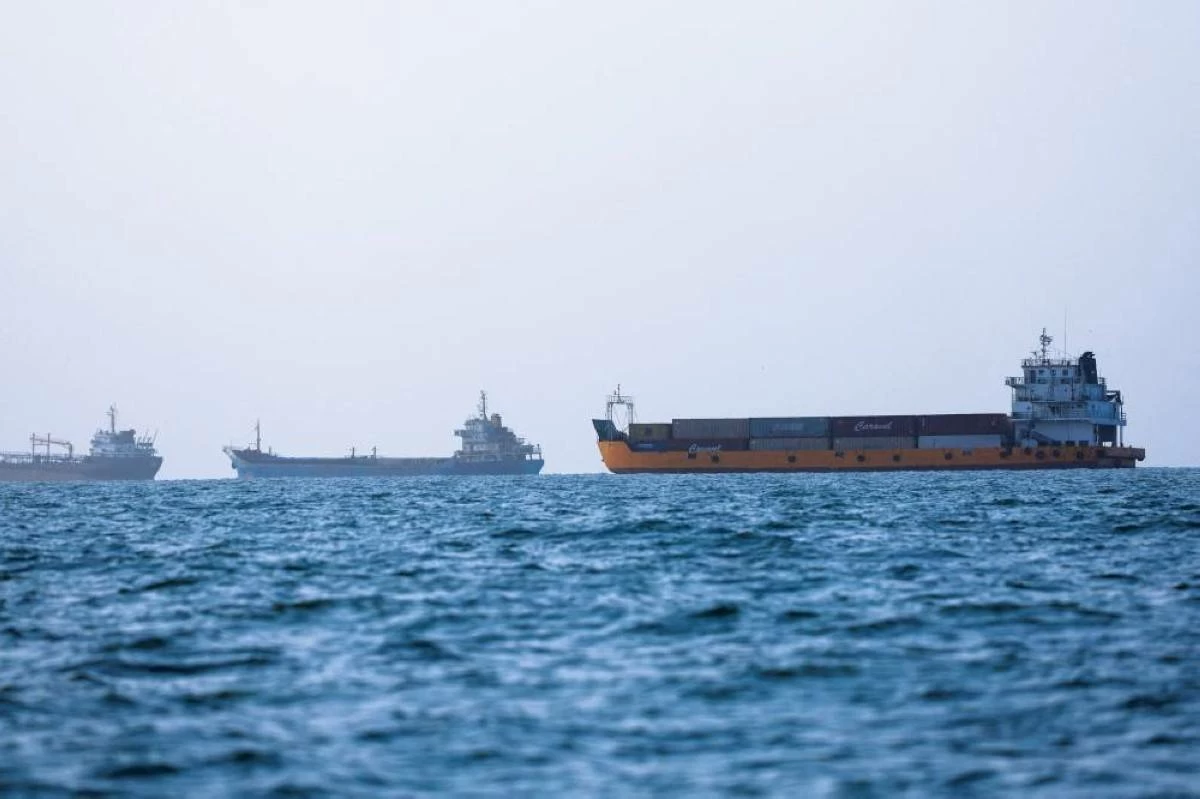

Pressure continues to mount on Iran from inland, with US President Donald Trump declaring that the Strait of Hormuz is open and that Iran is in big trouble.
He did not rule out a military option, coinciding with the tightening of the blockade on Iranian ports, sanctions, and the emergence of a worsening fuel crisis inside Iran, while Qatar, Oman, and Pakistan are trying to revive the diplomatic track, which Washington confirms is still stalled.
Trump told reporters at the White House yesterday that the United States had completely cleared the Strait of Hormuz of mines, and that millions of barrels of oil pass through it daily.
He also stressed that Iran is in big trouble and cannot pay its soldiers’ salaries.
He stressed that the current focus on economic pressure does not mean abandoning the military option, saying that Washington does not want to talk to Iran and is not seeking a meeting with it at the moment.
Trump’s remarks came as Kpler data showed a slight improvement in shipping traffic, with 10 ships carrying raw materials crossing the Strait on Wednesday, compared to eight the previous day, but traffic remained below the 10-day average of about 15 ships.
Economic strangulation
The White House confirmed that the pressure is entering a phase focused on exhausting Tehran’s economic capabilities after weakening its military capabilities.
US Spokeswoman Caroline Levitt said Iran is in a “very vulnerable position,” and that Treasury Secretary Scott Bessent continues to use economic tools against it.
She noted that the naval blockade remains in place and that Washington “effectively controls” the Strait. She added that no negotiations are underway because Tehran has not shown any seriousness in reaching an agreement, and stressed that Trump is keeping all options on the table.
For his part, US Defense Secretary Pete Hegseth said that economic pressure is currently the “most painful” for Iran, but stressed that military strikes remain an option.
Meanwhile, Bessent called on the Iranian regime to spend its resources on its people instead of “directing billions of dollars to its proxies,” arguing that Iranians are struggling to meet their basic needs.
In a sign of the widening scope of the blockade, the US Central Command (CENTCOM) announced that it had diverted 75 commercial vessels, disabled three ships and boarded two ships up to August 27 to ensure compliance with the restrictions imposed on Iran.
The aircraft carrier group USS Theodore Roosevelt is preparing for a deployment of more than seven months to the Middle East in the coming weeks, replacing the USS George Washington.
This indicates Washington’s willingness to maintain a heavy military presence in the region despite the centre of gravity currently shifting to economic warfare.
Fuel crisis hits the country
The effects of the sanctions are becoming increasingly apparent within Iran. Vice President for Executive Affairs Mohammad Jafar Ghaempanah acknowledged that the US embargo is preventing the country from importing fuel.
At a time when domestic production is insufficient to meet demand, long queues have formed at gas stations, some of which have run out of fuel, while Iranians have rushed to stockpile fuel and food amid fears of shortages.
The Wall Street Journal reported that labour protests have emerged at oil and gas facilities and factories, coinciding with rising living costs.
With the Iranian rial exceeding the level of two million rials to the dollar, losing about 7% of its value in a week, shops in Tehran reported a temporary shortage of rice and cooking oil as a result of panic buying.
Alongside the economic pressures, the ‘Human Rights in Iran’ organisation reported that the authorities have executed more than 500 people since the beginning of 2026, including protesters and political prisoners, amid fears that the executions are being used to deter a new wave of protests.
Mediation without negotiations
On the diplomatic track, Qatari Prime Minister and Foreign Minister Sheikh Mohammed bin Abdulrahman Al Thani carried to Tehran an invitation to resume dialogue, stressing the importance of respecting freedom of navigation in the Strait of Hormuz.
The Qatari Foreign Ministry stated that the talks addressed a proposed phased framework for establishing a temporary joint shipping corridor with Oman through the Strait, along with a project to clear it of mines. This was in exchange for mediation efforts.
Tehran continued its policy of blackmail related to the Strait, as Iranian officials linked its opening to Washington meeting conditions that included lifting the blockade and sanctions, while the Secretary of the Supreme National Security Council Mohsen Rezaei threatened a military escalation in the region in the event of a resumption of operations against Iran.
The Qatari mediation coincides with Omani and Pakistani efforts to open the corridor, but the American position, according to statements by Trump and the White House, is still based on one equation: continuing the economic and maritime stranglehold until Washington sees Iranian willingness to negotiate on serious terms, while keeping military force in the background.