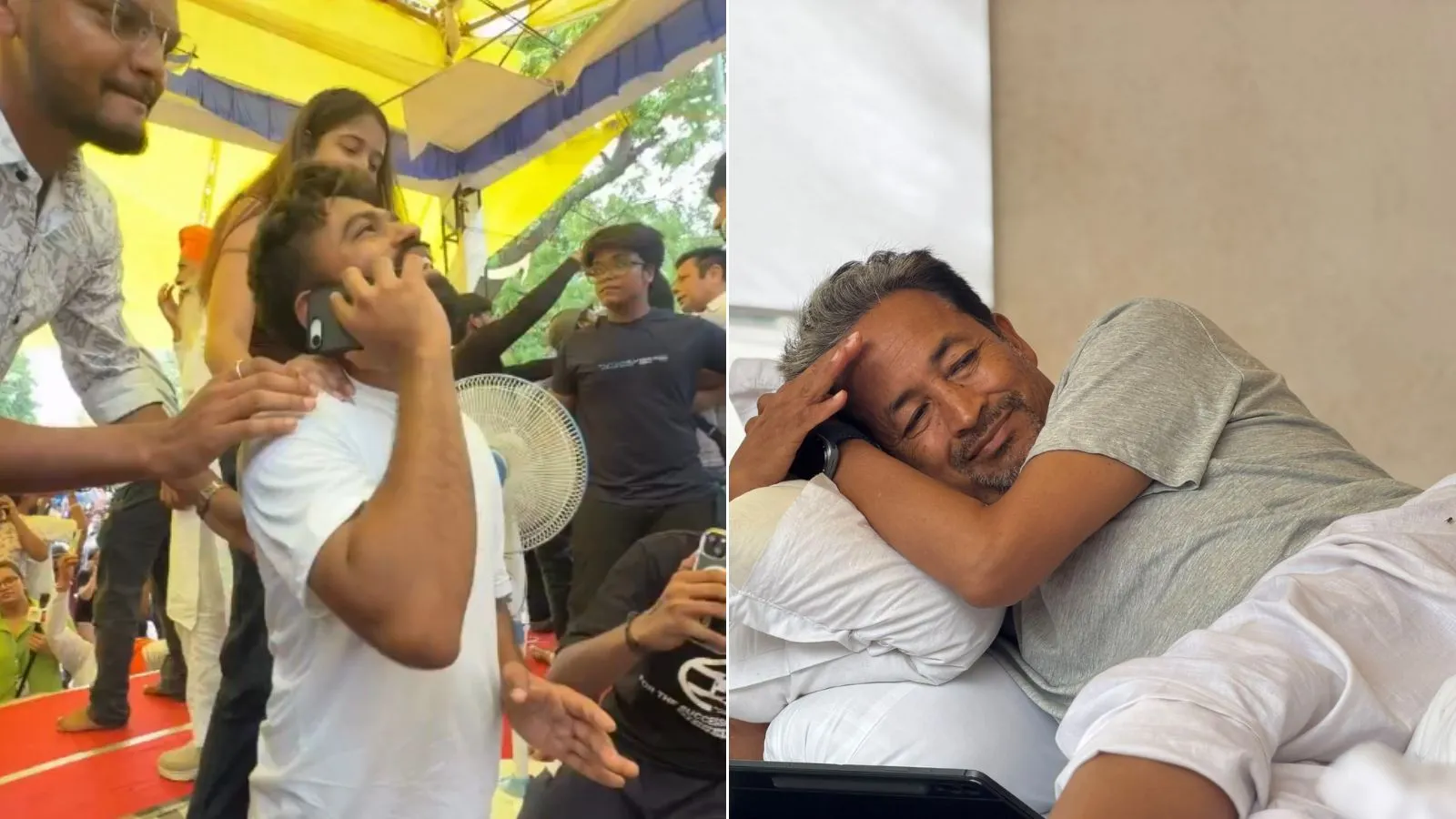
New Delhi’s Jantar Mantar has, for nearly two months, been the epicentre of one of India’s largest youth-led movements in years. What started as a satirical social media joke turned into the Cockroach Janta Party (CJP) — a Gen Z-driven campaign that pulled in a Ramon Magsaysay award-winning activist, triggered a hunger strike, disrupted Parliament’s monsoon session, and ultimately forced the resignation of a Union minister.
Here are the five defining moments of the CJP protest, from its founding to the resignation of Education Minister Dharmendra Pradhan.
The Cockroach Janta Party traces its origin to a Supreme Court hearing on May 15, 2026, during a contempt case. Chief Justice of India Surya Kant, while referring to online criticism of judges, remarked that unemployed young Indians were like “cockroaches”.
“…There are youngsters like cockroaches, they don’t get any employment, they don’t have any place in profession. Some of them become media, some of them become social media, some of them become RTI activists, some of them become other activists, and they start attacking everyone…” the CJI had said.
DEMOCRACY WINS! 🇮🇳🇮🇳🇮🇳 pic.twitter.com/HpCaqBkPxc
— Cockroach is Back (@Cockroachisback) July 25, 2026
Within a day, Abhijeet Dipke — a 30-year-old political communications strategist from Chhatrapati Sambhajinagar (formerly Aurangabad), Maharashtra, who had previously worked with the Aam Aadmi Party and was at the time completing a master’s degree in public relations at Boston University — posted a satirical question online: what if all the “cockroaches” came together? The post snowballed within hours, and Dipke followed it up with a simple sign-up form and website, formally launching the Cockroach Janta Party (CJP) on May 16, 2026, as a parody of the BJP.
What began as an internet satire exploded into a genuine political movement. Within days, CJP recorded over a lakh sign-ups, launched its own manifesto and anthem, and crossed 20 million followers on Instagram — reportedly surpassing every established Indian political party on the platform. The party is not registered with the Election Commission of India and describes itself as the “Voice of the Lazy and Unemployed.” Its rapid rise was fuelled by real anger over unemployment, examination irregularities, and a sense of political disenfranchisement among Indian youth.
2) Abhijeet Dipke’s return to India
Although the CJP was conceived and launched from the United States, Dipke announced in early June that he was leaving Boston to lead the movement on Indian soil. He landed at Delhi’s Indira Gandhi International Airport on the morning of Saturday, June 6, 2026, telling supporters he was headed straight to Jantar Mantar after clearing immigration.
His return was driven by the escalating National Eligibility cum Entrance Test (NEET) crisis. Days after NEET 2026 was conducted, the exam was cancelled following reports that question papers had leaked and other irregularities had taken place — a controversy that, by CJP’s account, affected more than a crore students across NEET, CUET, CBSE and SSC-GD examinations.
Story continues below this ad
In the aftermath, several NEET aspirants reportedly died by suicide, a tragedy that became a central rallying point for the movement. Dipke’s stated aim on landing was to seek police permission for a peaceful demonstration at Jantar Mantar and press the demand that Union Education Minister Dharmendra Pradhan take moral responsibility and resign. CJP’s protest at Jantar Mantar began in the weeks that followed his arrival.
3) When Sonam Wangchuk joined the protest
The movement gained a formidable new face when Ladakh-based engineer-educator and Ramon Magsaysay awardee Sonam Wangchuk, who had called himself an “honorary cockroach” in solidarity with the CJP, began an indefinite hunger strike at Jantar Mantar on June 28, 2026, in support of the demand for Pradhan’s resignation.
As his fast stretched on, Wangchuk’s health deteriorated sharply — by the 17th day he had reportedly lost several kilograms and was too weak to speak at length. Around the 20th–21st day, Delhi authorities moved him to a hospital, citing court orders and medical necessity; Wangchuk, his wife Gitanjali, and CJP supporters described the move as forced removal from the protest site. While initially he was admitted to a government hospital, Wangchuk was later shifted to Medanta Hospital in Gurugram from where he continued his fast.
The fast finally ended late on the night of July 23–24, 2026 — on its 26th day — after Union Ministers JP Nadda and Jitendra Singh visited him at the hospital with written government assurances, including a promise of fast-track courts, a stricter law against paper leaks, no cases against peaceful protesters, and parliamentary discussion on the issue.
Story continues below this ad
Prime Minister Narendra Modi also released a video message urging Wangchuk to break his fast, after which Wangchuk broke his fast.
4) The ‘Chalo Sansad’ march
The CJP called for a march titled “Chalo Sansad” (“Let’s go to Parliament”), timed to coincide with the opening day of Parliament’s monsoon session on July 20, 2026. Protesters were asked to carry the national flag and a copy of the Constitution, or photographs of B R Ambedkar, Mahatma Gandhi or Bhagat Singh, and to avoid political party flags.
Thousands of demonstrators, largely students and young people, gathered at Jantar Mantar and attempted to march toward Parliament without police permission. Roads around the protest site were barricaded, and security personnel responded with baton charges and tear gas to prevent protesters from reaching Parliament.
Delhi Police put the number of people injured in the ensuing clashes at around 180, including both security personnel and protesters, while demonstrators alleged mistreatment despite protesting peacefully. Opposition parties disrupted the ongoing monsoon session in solidarity with the protesters, and a senior government minister held an initial round of talks with CJP representatives in the days that followed — the government’s first direct engagement with the movement.
5) Dharmendra Pradhan’s resignation
Story continues below this ad
Nearly ten weeks after the protests began, Union Education Minister Dharmendra Pradhan tendered his resignation on Saturday, submitting it to Prime Minister Narendra Modi. In his resignation message, Pradhan wrote, “I am pained by the events of the past ten days. This is not a matter of personal prestige for me. India’s youth power is the true strength of this nation. It is my resolve not to let the country’s youth get trapped in a web of confusion.”
— Dharmendra Pradhan (@dpradhanbjp) July 25, 2026
While Pradhan’s exit met one of CJP’s central demands, the organisation has indicated that its broader push for examination reforms and accountability is not yet over.