For nearly a year, Fulmani Lakra and her Adivasi family from Giridh’s Badgarh village spent hours at the local Jharkhand Gramin Bank. They stood in long queues, ran from counter to counter and even allegedly faced humiliation from the bank staff, all to do one thing — get their e-KYC done so they could withdraw the meagre Rs 8,000 lying in her father-in-law’s account to pay for his tuberculosis treatment.
Then, on July 6, the thing they feared most happened — her 75-year-old father-in-law, Ratan Lakra, died. “I felt ashamed that I couldn’t save him. I pleaded with the bank staff but they pushed me out of the bank and slammed the door on my face. All this while I kept telling him that the process was underway and that he would soon be shifted to a hospital for treatment.”

The money they were trying to access was Ratan Lakra’s old-age pension under a government scheme. The family’s ordeal has raised questions about whether safeguards meant to protect the ailing and the elderly were becoming barriers to accessing welfare.
 Documents related to Ratan Lakra’s pension account, which his family says they struggled for months to update through the e-KYC process before his death. (Express Photo enhanced using AI)
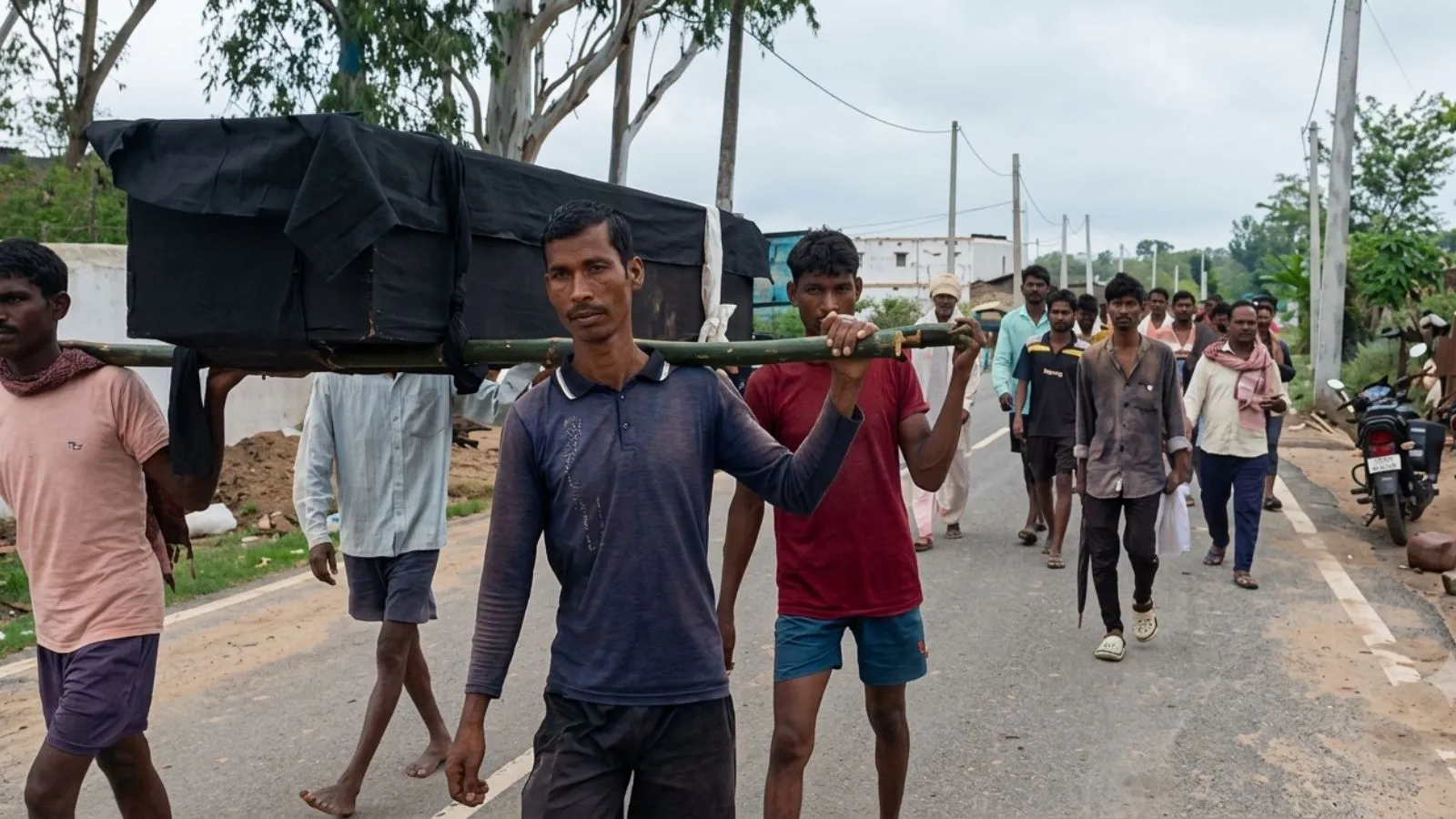
Hours after Ratan’s death, his family placed his body outside the bank’s Garhwa branch and held a protest, prompting Chief Minister Hemant Soren to take cognisance of the matter and order an inquiry.
For the grieving family, this offers little solace. “For months, we’ve been visiting the bank, but nothing came of it. The staff kept humiliating me in front of everyone. Finally, we were informed that a money withdrawal required an e-KYC update,” Fulmani, a daily wager and the sole breadwinner of her family, says.
The long wait for pension
Typically, e-KYC takes minutes to a few working days. When a customer’s account is flagged for a periodic KYC update under Reserve Bank of India rules, the bank asks the customer to update their details using an official identity document such as Aadhaar. With the customer’s consent, authentication is done using a fingerprint, iris scan or, in eligible cases, a one-time password. Once these details are verified and the bank updates its records, the account becomes fully operational, subject to other requirements.
Fulmani, a mother of five, says they had planned to admit Ratan to Daltonganj Sadar Hospital in Palamu district, about 80 km from their village, and had gone to the bank to withdraw money to book an ambulance when they were told that e-KYC needed to be done.
Story continues below this ad
 Ratan Lakra’s family during one of their visits to the Jharkhand Gramin Bank branch, where they say they spent months trying to complete the e-KYC process to access his pension. (Express Photo enhanced using AI)
“My husband is visually impaired, and the weight of the family falls on me,” she says. “We hoped to use my father-in-law’s old age government pension to get him treated, but when my mother-in-law went to the bank last October, she was told KYC needed to be done.”
It was what the family would hear every time they went to the bank — without really being told how to go about it. They ran from messengers to cashiers to the Bank Sakhi — a woman business correspondent appointed by a bank to provide basic banking services in villages without visiting the branch — without much change.
“From March, I began to make the bank rounds, with the same result,” she says. “It was another customer who finally told me that all I needed was a form lying on the desk. It seemed like such a simple thing, yet the bank made me chase it for a month.”
Then came the next hurdle, the bank manager’s signature, and Fulmani spent the next two months waiting for it. After a while, she even began taking her ailing father-in-law to the bank in an auto in the hope that it would convince the staff.
Story continues below this ad
“I begged the messenger, Nandlal Ram, to ask the manager to come see the state of my father-in-law. I was told, ‘Don’t cause a scene here. Sir is in a meeting’.”
After Ratan Lakra’s on July 6, messenger Nandlal Ram was suspended while the branch manager, Krishna Ram, was transferred pending inquiry. Ram has denied the allegations, claiming he was “being made a scapegoat”.
 Ratan Lakra, a 75-year-old pension beneficiary whose family says delays in completing e-KYC prevented them from withdrawing money for his tuberculosis treatment before his death. (Express Photo enhanced using AI)
Ranka Sub-Divisional Magistrate (SDM) Md Parvez, who conducted a spot inquiry after the incident, acknowledged that the preliminary findings suggested lapses, but also said the delay in KYC couldn’t be directly linked to Ratan Lakra’s death. “The KYC was completed on June 9, nearly a month before his death,” Parvez told The Indian Express, adding that the report had been sent to the bank’s Palamu regional manager, Arun Kumar, for departmental action.
Regional Manager Arun Kumar, meanwhile, claimed that the family had been informed on June 9 that the KYC process had been completed and they could visit the bank to withdraw the money.
Story continues below this ad
“The family told the inquiry team they could not come to the bank immediately because of a wedding in the household,” he said.
Back in Badgarh village, the family is still coping with the loss. Fulmani wonders how she’ll take care of the family – her mother-in-law, husband, and five children. “My husband and mother-in-law are in shock. I’m the only one who keeps the family going,” she says.