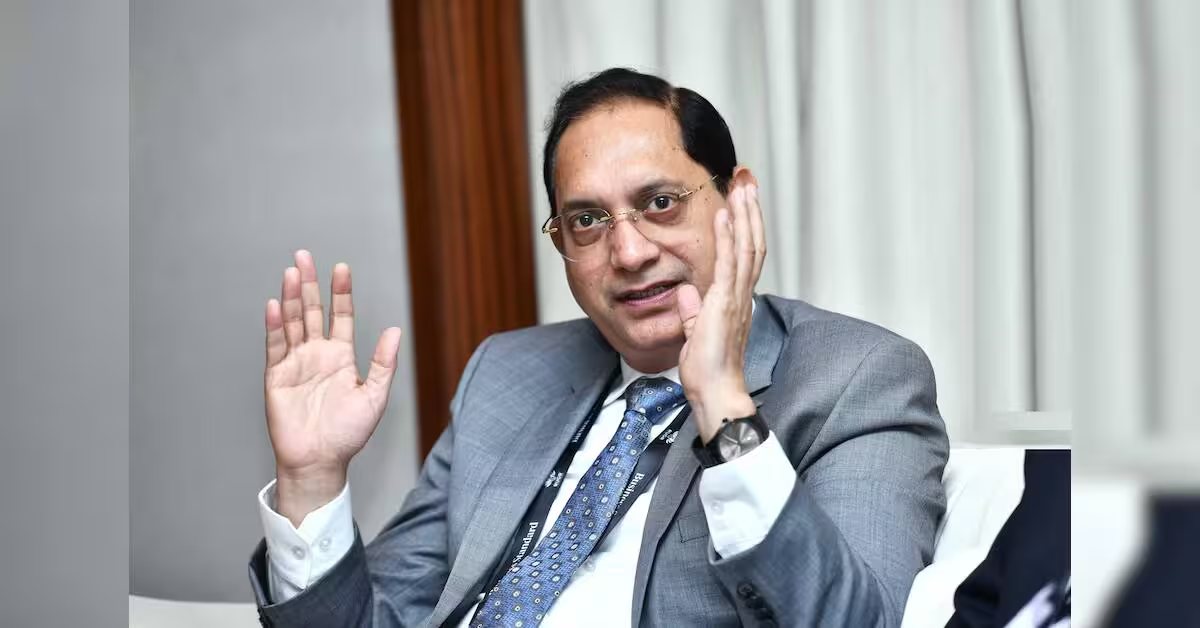
The Securities and Exchange Board of India (Sebi) is not in favour of extending market trading hours as it would not necessarily improve market efficiency, with concerns around cybersecurity and liquidity, chairman Tuhin Kanta Pandey said on Wednesday.
Speaking on the sidelines of the 65th World Federation of Exchanges (WFE) General Assembly and Annual Meeting, Pandey said that while a global group in the International Organization of Securities Commissions (IOSCO) was examining the possibility of extending trading hours, India was weighing the implications.
“At least to us, we are not really looking at it as a big priority. One has to see how to handle the cybersecurity and what will happen to liquidity as the hours increase so much. Extending market hours is not necessarily a very efficient way. For such an approach, there should be very strong reason — what are the costs and what are the risks,” said Pandey.
He flagged cybersecurity as a key concern, pointing to frequent cyber incidents in global markets. Longer trading hours could also stretch market participants and potentially affect liquidity, he said.
While globally the buzz on longer trading hours has gathered pace, Sebi had nearly two years back returned proposals on extending market hours for derivatives trading.
Discussions have grown as US stock exchange Nasdaq will expand trading hours of US equities to 23 hours a day, five days a week, starting December 6. The exchange will have a one-hour maintenance pause.
At the same summit, Edward Knight, executive vice-chairman of Nasdaq said, “We feel it will serve investors better and we are looking forward to executing our plans on December 6. Twenty-four hour trading is already occurring. The question is whether it occurs in a way that investors are protected and on a platform that is resilient and has all the rules and regulations that investors have come to expect. And, that’s what we are going to deliver and it will be in the public interest to do it.”
In India’s Gift-IFSC in Gujarat, the NSE International Exchange, also recently started operations for 23.5 hours.
On discussions around reforms in securities lending and borrowing mechanism (SLBM), Sebi chairman said while several meetings with stakeholders have been conducted, it has been made clear that India’s framework would be transparent and not over-the-counter (OTC)-based.
“We are very clear. We don’t want anything that is dark pool. We don’t want an OTC kind of thing. We want it to be on the exchange. Hopefully, we should be able to work out a model which will be pretty enthusiastic and very transparent for the world,” he added.
Securities lending globally operates predominantly as a bilateral OTC market between institutions and custodians. However, in India, it is mandated to occur on stock exchanges for transparency.
On any potential curbs in margin trading facility, the Sebi chairman added that the regulator has not taken any final decision yet. And, it would bring it up for discussion if any plan is ‘concretised.’
Speaking on the sidelines, Pandey also listed the challenges for allowing dual listing on exchanges in GIFT City.
Speaking at the summit, Pandey said India’s investor base could exceed 380 million in five years if the current growth of around 20 per cent annually since FY19 continues, up from about 154 million now.
Cautioning that “ease of access does not necessarily mean understanding of risks,” he stressed investor education.
Pandey said artificial intelligence offers opportunities in surveillance and compliance but raises concerns over model reliability, cybersecurity and dependence on few technology providers.