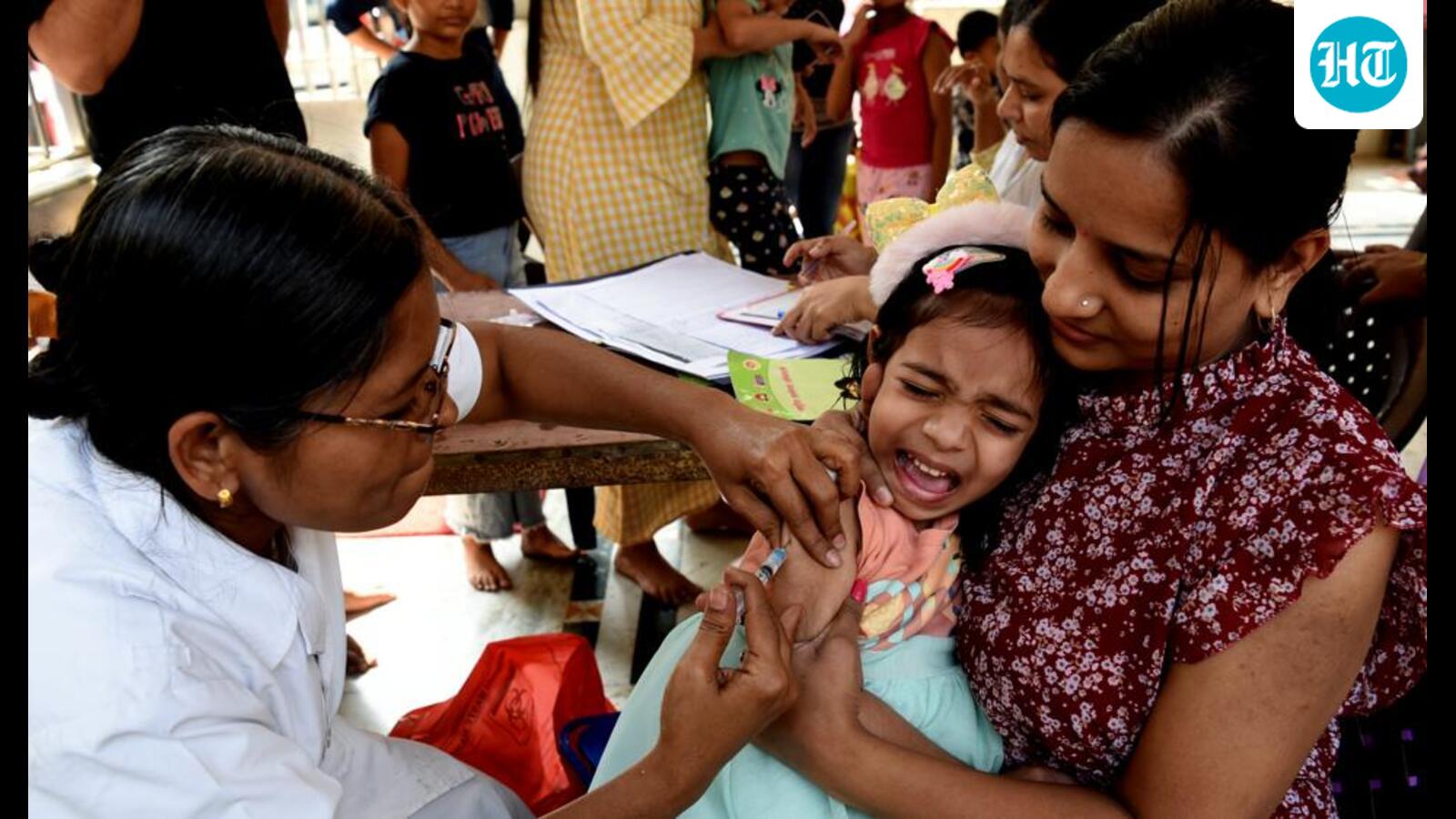
When the World Health Organization launched its global smallpox eradication campaign in the 1960s, it was predicted that India would likely be the last country in which the disease was eliminated. Smallpox campaigns in a large country with remote villages, difficult terrain, weak health infrastructure and a population that was constantly on the move were certainly a challenge.
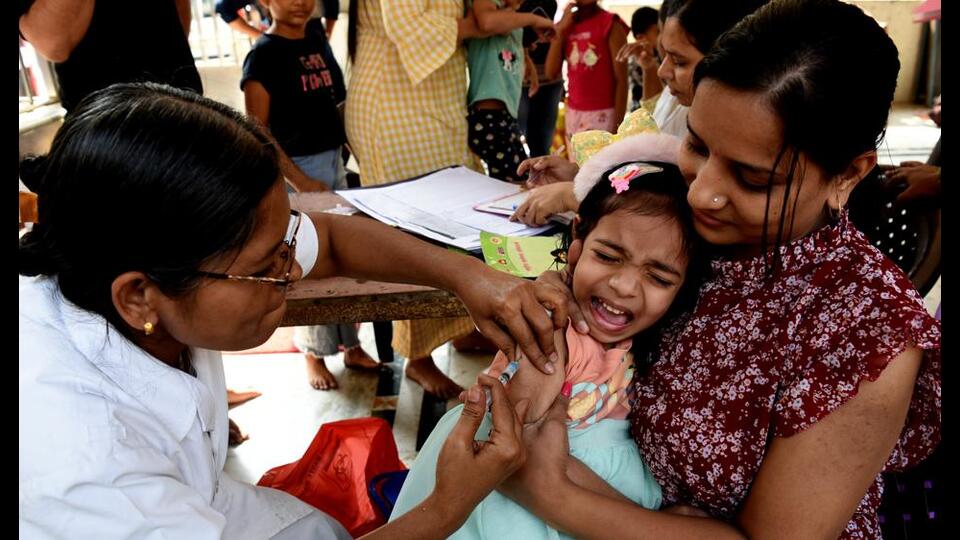
India’s last case of smallpox was identified on May 24, 1975, in Assam. Over the two years that followed, health workers searched for suspected cases, covering 110 million households across more than half a million villages and 260 urban areas. Finally, in April 1977, India was certified free of smallpox, six months before the last naturally occurring case was found in Somalia. The world would be declared free of smallpox two years later. Since then, India has achieved polio-free status and contributed to the global eradication of rinderpest, an animal disease affecting cattle, clearly demonstrating that it has the capability to eliminate diseases when there is a goal and national commitment. It is time to turn this attention to another disease: Measles.
Measles is a terrible disease of childhood that kills thousands of children every year even though we have had a highly effective vaccine for over six decades. If you have never seen someone with measles, look online at photographs of children suffering from the disease. It will be enough to convince you. Children with measles who are lucky enough to survive often end up suffering from complications including pneumonia, blindness, encephalitis, and a general loss of immune function.
Measles is also among the most contagious infectious diseases in the world. An infected individual can transmit the virus to over 15 susceptible, unvaccinated people. The virus can remain infectious in the air for up to two hours after an infected person has left a room, which makes measles particularly difficult to control unless vaccination coverage is high.
Although India has made substantial progress against measles, it has not yet managed to eliminate the disease, despite setting a goal of eliminating both measles and rubella by increasing vaccination coverage above 95% with two doses of measles- and rubella-containing vaccines in every district. But we are far from that goal.
Part of the reason may be that mounting a campaign is not the same as sustaining a public service. India is remarkably good at organising large events and mobilising people for a defined purpose. We are capable of organising the largest elections in the world, and enormous religious gatherings like the Kumbh Mela. But the less visible, repetitive work of maintaining public services is often more difficult. Roads need to be maintained every day, garbage needs to be collected every morning, and water systems need constant attention. This is the skill that the country needs to get better at.
Measles cannot be eliminated through campaigns alone. Overall improvements in vaccination coverage are helpful, but even small pockets of under-immunised children are sufficient to keep the disease alive. Eliminating these pockets will require routine follow-up by health workers to identify every child who has missed a dose and outreach to migrant families and remote communities. It also requires functioning primary health centres, as well as surveillance systems capable of promptly detecting outbreaks.
The challenges are significant. A study based on National Family Health Survey (NFHS)-5 data covering nearly 44,000 children aged 24–35 months found that 11.5% had received no measles vaccine at all, also known as zero-dose prevalence, while another 29.8% had received only one of the two recommended doses. Zero-dose prevalence was particularly high in the eight northeastern states, which had higher rates than the national average. In 26 districts, more than 30% of children received no measles vaccination at all.
Children from the poorest households had 66% higher odds of receiving no measles vaccine than those from the wealthiest households. Also, children whose mothers had no schooling had 54% higher odds than those whose mothers had more than 12 years of education. This shows why national campaigns alone will not be sufficient. India needs to focus on reaching missed children based on where they live. Measles outbreaks themselves should be an opportunity to investigate coverage gaps beyond the immediate outbreak area.
All this is doable. The early years of the Modi government saw the launch of Mission Indradhanush, which I played a role in designing. The initiative sought to reach children and pregnant women who had been missed by routine immunization services. Its intensified version targeted districts with particularly low coverage. An evaluation of the programme found that full immunisation coverage increased from 50.5% to 69% following the intervention. At the national level, NFHS data subsequently recorded an increase from 62% in 2015–16 to 76.4% in 2019–21.
To be sure, maintaining measles elimination status is not easy. Last week, the US lost its measles elimination status after the Pan American Health Organization determined that sustained transmission had continued for at least 12 months, while Canada, Mexico and Bolivia have lost their designation in recent years. But, even if India does not achieve measles elimination immediately, the investment in identifying children who have missed vaccination, more reliable disease surveillance, stronger cold-chain logistics and greater accountability at the district and block levels would benefit virtually every other childhood immunisation programme, including those to tackle rotavirus, pneumococcal disease and Haemophilus influenzae type b.
No parent should have to watch a child suffer or die from a disease that can be prevented by a vaccine costing less than ₹80. India has demonstrated before that it can accomplish seemingly impossible public health goals. It can, and should, eliminate measles. It would be an incredible legacy to leave behind.
Ramanan Laxminarayan is the author of Bacteria to Buddha: How Cooperation Shaped Consciousness — and Makes Us Human. The views expressed are personal
(This is a Hindustan Times digital exclusive)