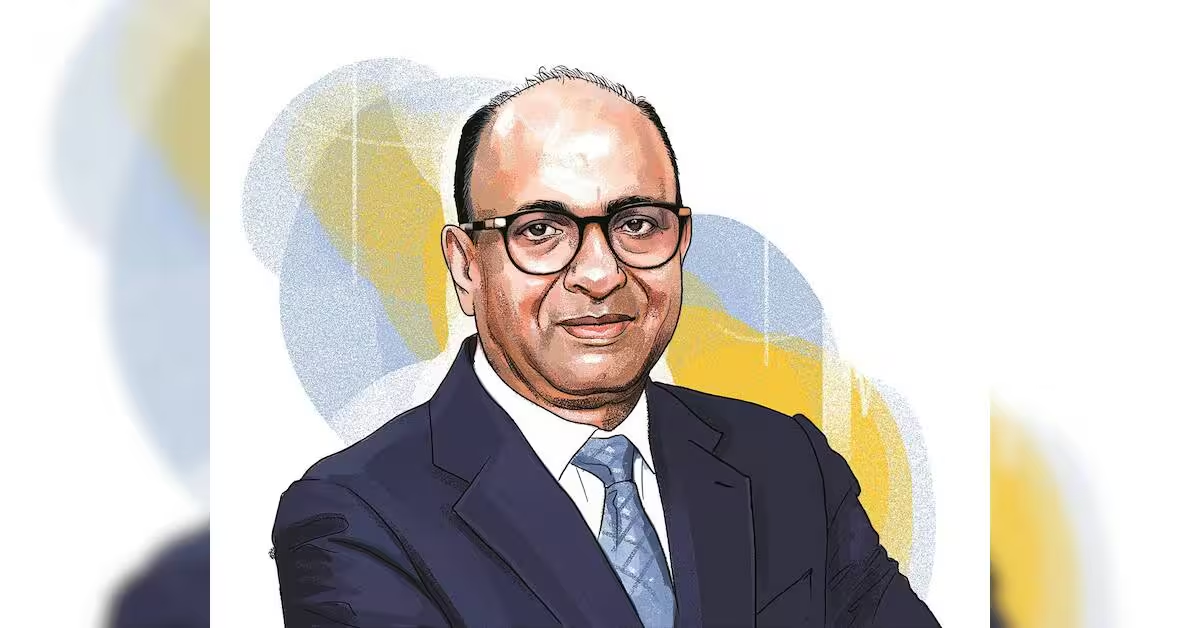
IndusInd Bank on Friday decided to invoke applicable malus and clawback provisions against its former managing director and chief executive officer (MD & CEO), Sumant Kathpalia, retrospectively from March 24, 2020, the date of his initial appointment as the bank’s chief executive. The lender also terminated his employment with immediate effect.
The decision was taken by the bank’s board, acting as the disciplinary authority, at a meeting on November 20, following the submission of an enquiry report by a former Bombay High Court judge on November 18.
The development comes more than 18 months after Kathpalia resigned as MD & CEO on April 29, 2025, taking moral responsibility for accounting discrepancies in the bank’s derivatives portfolio.
While the board had accepted his resignation from the positions of MD & CEO and director, it had communicated that he would continue to remain an employee of the bank until further intimation. Subsequently, disciplinary proceedings were initiated against him under the bank’s internal code of conduct. He was placed under suspension with effect from June 18, 2025, pending completion of the proceedings.
In its exchange filing on Friday, the bank said the board had decided to terminate his employment with immediate effect and invoke the applicable malus and clawback provisions from the date of his initial appointment as MD & CEO.
The decision follows an investigation into discrepancies in the bank’s derivatives portfolio, which came to light in March 2025. On March 10, the lender disclosed that an internal review had identified discrepancies that could have an adverse impact of 2.35 per cent on its net worth as of December 2024.
The bank subsequently appointed PwC to validate the findings of its internal review and assess the estimated impact. On April 15, it disclosed that PwC had estimated a negative impact of ₹1,979 crore as of June 30, 2024, equivalent to 2.27 per cent of its net worth as of December 2024.
The bank had also appointed Grant Thornton to conduct an independent investigation into the root cause of the discrepancies and examine the roles and actions of key employees. According to Grant Thornton’s findings, incorrect accounting of internal derivative trades, particularly in cases of early termination, resulted in the recording of notional profits and led to the accounting discrepancies. The cumulative adverse accounting impact on the bank’s profit and loss account as of March 31, 2025, was estimated at ₹1,959.98 crore.
The bank, in its Q4FY25 earnings, reported a net loss of ₹2,329 crore in the January-March quarter (Q4FY25) — its largest-ever quarterly loss in decades — owing to a substantial jump in provisions and contingencies, weighed down by multiple accounting discrepancies that were discovered in the reporting quarter.
The accounting lapses also led to the resignation of Arun Khurana, the bank’s deputy chief executive, in April 2025.
Kathpalia had headed IndusInd Bank since March 2020, taking over from Romesh Sobti, who led the lender for more than a decade. Before becoming MD & CEO, Kathpalia headed the bank’s consumer banking business. He had joined IndusInd Bank in 2008 and previously worked with foreign lenders, including Citibank and Bank of America.