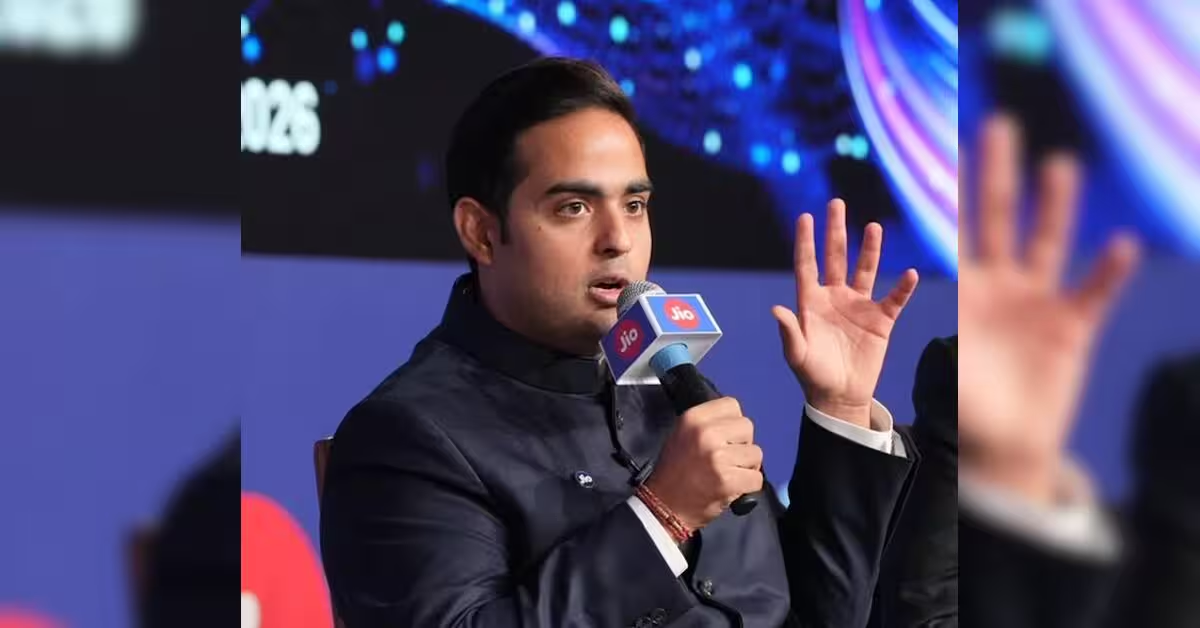
A day before the mega initial public offering (IPO) of Jio opens, Akash Ambani, chairman of Reliance Jio Infocomm, speaks about the company’s future, implications of the stock market listing, the telecom sector’s ask from the government, satellite broadband vision, tariffs and competition. Edited excerpts from an email interaction with Nivedita Mookerji:
A decade after it was launched, Reliance Jio is going for an initial public offering (IPO). With this, what will change for the company that triggered a digital revolution 10 years ago? What will the next decade stand for at Jio?
Jio is where I began my professional journey, so this step means a great deal to me. The IPO reflects the trust of over half a billion Indians, and with that trust comes responsibility to keep innovating and put customers first. Jio started as a vision, and it was a privilege for me to work with our team to turn it into our own technology stack, scoring many global firsts and over 7,220 patent applications. The next decade will be even more transformative. We want to take 5G, home broadband and artificial intelligence (AI) to many more people and businesses, and to take the technology we built in India to select international markets through partnerships. Our purpose remains to build one of the world’s leading digital infrastructure and platforms, creating enduring value for all shareholders.
What are the implications for the Indian telecom sector on the whole as Jio Platforms goes to the public markets?
Indian telecom proved that a digital nation can be built bottom-up, on affordable data. In FY26, Jio serviced 60 per cent of India’s wireless data. Jio’s listing is an important milestone in that journey. It lets public-market investors see how connectivity, technology and digital services together create value across the economy. I believe the sector is well placed to play an even greater role in India’s future.
Jio Platforms Managing Director Akash Ambani and Reliance Industries Non-Executive Director Isha Ambani during a press meet in Mumbai, days before the subsidiary opens what would be India’s largest initial public offering | Image: PTI
What is your biggest ask from the government in terms of telecom policy?
The government has consistently been ahead of the industry in envisioning India’s digital future. Digital India set the direction, and public infrastructure such as UPI, Aadhaar, Jan Dhan and DBT has brought services to people at scale. I deeply appreciate that foresight. It has earned India global recognition and gives us confidence in what the country can achieve. Policy certainty has been a big support to the industry. Sustaining this industry- and customer-friendly stance will take digital adoption deeper.
Valuation of Jio at the time of the IPO has been a talking point. Also, this is expected to be the largest IPO in India so far. What do the size and scale of the IPO signify?
The price band is public, and the valuation has come through the book-building process with investors, not from a management claim. True to the Reliance DNA, we have always believed in leaving enough on the table for incoming investors, so they stay invested for the long term as part of the Jio growth journey. The pricing carries a reasonable discount to the peer group, by design. The size reflects the breadth of Jio’s business and its role in India’s digital economy, and it is a landmark for Indian capital markets… What matters more to me is what it brings: a wider group of shareholders, and the responsibility to be transparent, uphold strong governance and create enduring value.
Will the quarter-to-quarter cycle be a challenge for Jio, which has operated like a start-up in many ways?
I do not believe so. Jio has the energy and nimbleness of a start-up, but runs with the rigour and discipline of a large enterprise. Jio onboarded a new set of global shareholders in 2020 and is a material subsidiary of the Reliance Group. As a result, Jio has been running like a quasi-listed entity, with gold-standard corporate governance mechanisms. Our performance is already reported every quarter as part of Reliance’s results, and transparency and accountability are already part of our DNA.
While comparisons between Jio and Bharti Airtel are often made in subscriber numbers, growth, profits and valuation, among other things, what, according to you, is the biggest similarity and difference between the two telcos?
Jio is not just a telco; it is a digital services company built on connectivity, spanning 5G and home broadband, cloud, devices, software, entertainment and enterprise services. Comparisons I leave to others, and we respect every competitor. The difference I would point to is that Jio is a technology platform that uses connectivity as its distribution layer. We designed and own the core technology ourselves, from the 5G core and OSS/BSS platforms to the software that runs the network. That is how we could deploy more than 1 million 5G cells within 19 months. Our technology and digital-products team is 12,477 strong, and it designs and develops across all four layers — autonomous network, hardware, software and applications.
Is it time for an industry-wide tariff hike in telecom, including at Jio? Related to that is India’s ARPU (average revenue per user per month), which has been among the lowest in the world. Do you have an ARPU target for the next five years?
Our promise to customers is simple: data they can afford, on a network that keeps getting better. What I can point to is usage: in the quarter to June 2026, each customer used 43.7 GB a month. We have not set an ARPU target. Our approach is to build value per customer through deeper engagement, upgrades to 5G and new digital services, so that revenue growth rests on sustainable customer value. Affordability and inclusion will remain central to our growth.
AI will be a major driver in telecom going forward. How should the regulatory environment adapt to the change?
Our ambition is AI for every Indian, not a privileged few. JioBharat IQ and HelloJio work across 12 Indian languages, so people can talk to AI in the language they think in. Regulation should encourage innovation with clear, proportionate and predictable safeguards, and adapt as technology moves. Policymakers, industry and researchers must work together on data protection, cybersecurity, accountability and human oversight, so that AI is deployed responsibly and in the interest of users.
When do you expect satellite broadband to take off in India, and what does the Jio satellite broadband service plan to achieve?
Jio’s vision is to enable digital life for every Indian by connecting everything everywhere at the highest quality and most affordable price. While telecom connectivity is ubiquitous in India, with 99 per cent population coverage, there are some use cases for satellite connectivity in maritime, aviation and some of the remotest regions. Thus, satellite complements terrestrial networks; it does not replace them… We are evaluating the possibility of developing a sovereign Low Earth Orbit (LEO) satellite constellation for India. At the same time, we are building ground station infrastructure in the country. We are also evaluating partnerships with leading global constellation providers to bring services there sooner. Over the long term, the opportunity is to create an indigenous satellite connectivity capability for India. The timing will depend on a multitude of factors like technology evolution and approvals, etc., so I will not put a date on it.