3 min readUpdated: Jul 18, 2026 07:26 PM IST
Mumbai-Ahmedabad bullet train project latest update: The National High Speed Rail Corporation Limited (NHSRCL) on Saturday said the second Tunnel Boring Machine (TBM) has started excavation work from Sawli (Ghansoli) towards Vikhroli in Maharashtra for the Mumbai-Ahmedabad bullet train project. Of the 10-km tunnel section, 7 km will pass beneath Thane Creek, making it the country’s first undersea tunnel for a railway corridor.
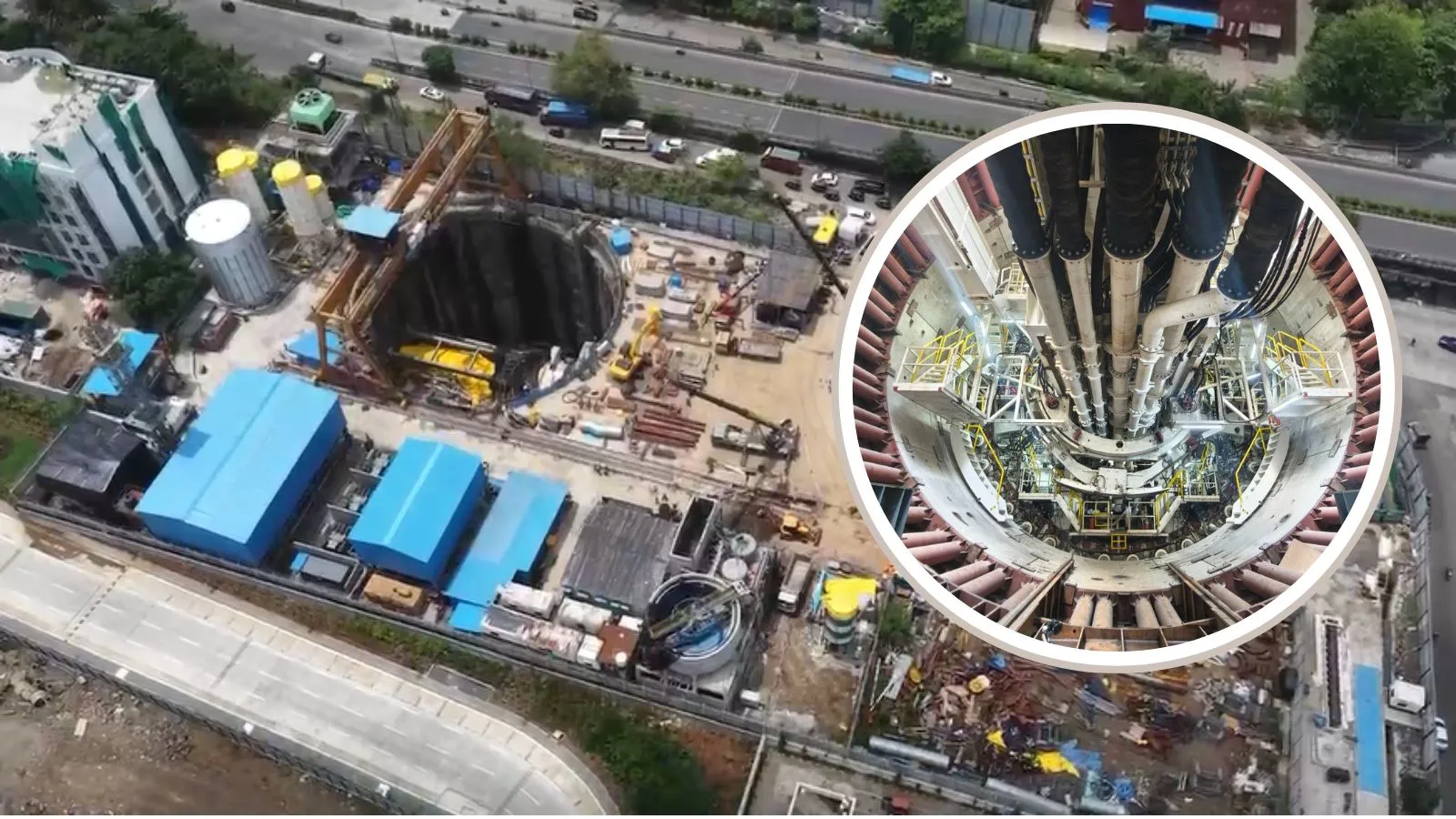
 Mumbai-Ahmedabad bullet train project: Second TBM starts undersea tunnel work (Image: NHSRCL)
The Mumbai-Ahmedabad High Speed Rail (MAHSR) corridor includes a 21-km-long underground tunnel between Sawli (Ghansoli) and Bandra Kurla Complex (BKC) in Mumbai. The tunnel is being built using Tunnel Boring Machines (TBMs). The first TBM began its 6-km drive from Vikhroli towards BKC on July 5, 2026, while the remaining 5-km section has already been completed using the New Austrian Tunnelling Method (NATM).

Tunnel Boring Machine deployed for India’s first bullet train project
According to NHSRCL, this TBM is among the largest machines ever deployed for railway tunnel construction in India. It has a 13.6-metre-diameter cutterhead, about the height of a four-storey building, weighs around 3,200 tonnes, equivalent to nearly 500 Asian elephants, and is 96 metres long, almost the length of a football field.
 Mumbai-Ahmedabad bullet train project: Second TBM starts undersea tunnel work (Image: NHSRCL)
“The machine comprises several key components, including the cutter wheel/head, main bearing, jaw crusher, erector, main shield, tail shield, and four specialized gantries that support tunnelling operations.
The machine is configured as a Mixshield type, semi-automatic, slurry-based TBM. The Mixshield method utilizes a pressurized liquid bentonite slurry circuit to actively stabilize the tunnel face during excavation, providing a highly reliable and proven technology for driving through complex and challenging geological conditions,” it said.
The NHSRCL has designed tunnel section excavated using TBMs as a fully waterproof structure. “Continuous real-time monitoring systems for structural performance, groundwater behaviour, and overall construction safety are also installed.
To prevent water ingress, the tunnel lining is protected using double-layer Ethylene Propylene Diene Monomer (EPDM) gaskets combined with hydrophilic seals, ensuring long-term structural durability and safety,” it added.