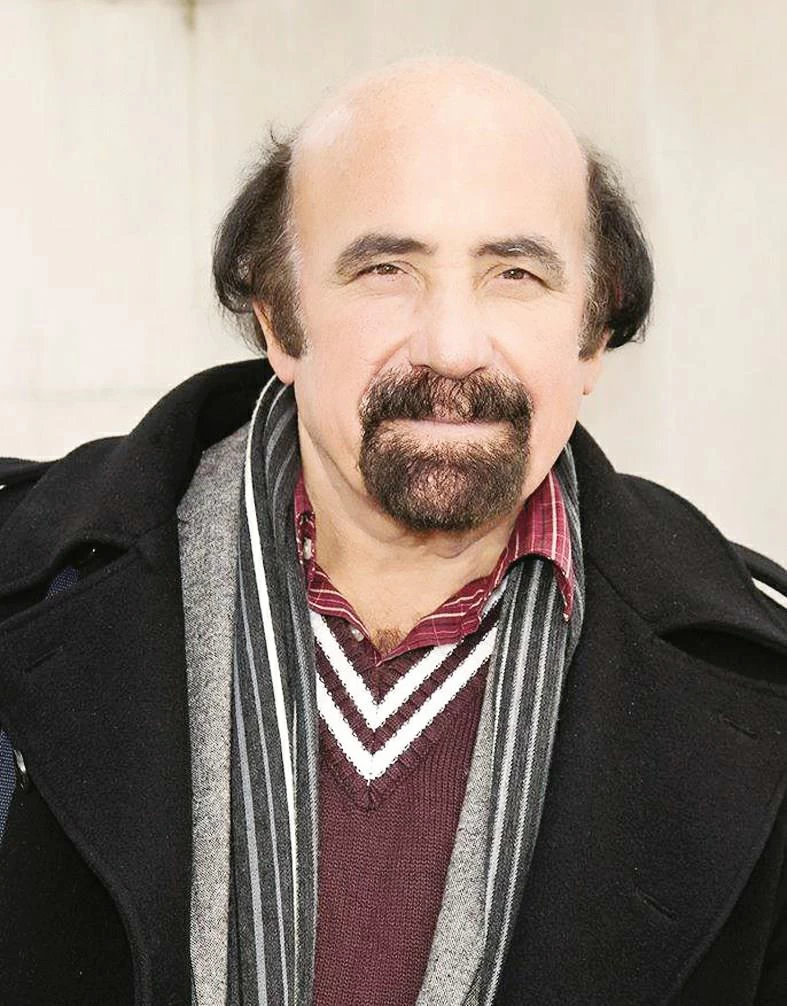

كنا ونحن نقرأ للشاعر الناقد الصحفي محيي الدين اللاذقاني، نشعر بمهابة وإجلال، فالفاصل العُمري، والفارق المعرفي، يدفعان للاستفادة من النصّ بعيداً عن الاقتراب من الشخص، وعندما لقطتُ حساب ضيف هذه المساحة على مواقع التواصل، تشبثتُ بصاحبه، وأعدته لأزمنة الصِّبا، وحاولتُ تعريفه بسابق مودة صحفيّة، وكان يستمهلني ومضت أعوام، وعاد قبل أسابيع إلى رسائلي، وكأنه تذكّر وعده الذي قطعه، فأبى بكرم نفس، وأناقة مثقف، إلا أن يفي بما وعد، فكانت هذه الإجابات التي زادتني احتراماً لمن كنتُ أرقب كل أسبوع زاويته «طواحين الكلام».. فإلى نصّ الحوار:
• في حياة كل منا «شيفرة» تتجلى على مدى حياته، ما «الشيفرة» التي تشعر أنك تفك رموزها، وتتمثل تداعياتها؟
•• «شيفرتي» شجرة على رأس جبل حلمت بها طفلاً، فصارت رمزاً للأمل، وكان بيتنا في مقدمة بيوت قريتنا «سرمدا» حيث كنت أقف وأتأمل الجبل دون شجرة تزين قمته، فلما كبرت ذهبت إلى أعلى قمة مشياً، وزرعت شجرة، ولما تشردت، وتهجرت وعشت سنوات عدة في المنفى كبرت الشجرة، وصار سكان القرية يسمونها شجرة محيي الدين، وخلال سنوات الثورة كنت أذهب خلسة ومخاطرة، وأعبر الحدود لأراها، وحين يئس الناس، وأوشكوا أن يقتنعوا بالهزيمة بقيت أؤمن بانتصار الثورة، وأحلم بشجرة حرية على رأس جبل الكرامة، وحين انتصرنا، وتحررت سورية بعون الله من الفساد، والاستبداد رأيت «الشيفرة» لا تخذلني، وتفكفك رموزها بتوقيتها بكل سلاسة، ومحبة، فذهبت لأبارك لها بالنصر والتحرير.
• ماذا حملت من «سرمدا» للعالم؟ وماذا نقلت إليها؟
•• نقلت للعالم من «سرمدا» ومضات سحرية من الحب والحنين للطبيعة والناس، والألفة التي دربنا عليها شيخنا المتنبي القائل:
خُلقت ألوفاً لو رجعت إلى الصبا
لودّعت شيبي موجع القلب باكيا
ونقلت ما تعلمته عن أبي الفلّاح من قيم الرجولة، ومعناها، والكرامة، وما يتفرع عنها. أما الحرية فتعلمتها من العالم الفسيح بقاراته التي زرت معظمها، وفي بريطانيا بالذات كنت أحضر جلسات البرلمان كصحفي شاب بمتعة فيلم سينمائي خصوصاً حين أرى النواب يتخاصمون، ويختلفون، ويصرخون تحت قبة البرلمان دون استخدام العنف، فأقارنهم بحالتي أنا خريج المجتمع الذي يسوي خلافاته بالفؤوس والخناجر والسواطير، ومع فهم الحرية تعلمت أن السياسة ليست انقلابات عسكرية، وغطرسة سلطة، وقوة بل خدمة للناس وتيسيراً لشؤون المجتمع، والإنسانية.
• متى شعرت أن الأرض تُشقِي وتُسعد؟
•• حين عدت إلى سورية إثر غياب في المنفى 40 عاماً، ووجدتني سعيداً بسبب، ودون سبب، حتى كدت أطير فرحاً، عندها فقط أدركت عمق تفكير من قال إن «رجل الفكر يحتاج لمسقط رأسه»، وبدأت أفهم متأخراً لماذا وجدت الاندغام والذوبان صعباً في المجتمعات التي عشت بها خارج الوطن، أما شقاء المنفى فكان مشاركة لعذابات إخوة في الوطن كنت أحس دوماً بالتقصير إن لم أقم بما يساعد على تحررهم، وخروجهم من دوامة الفقر، والفساد، والاستبداد، والتخلف.
• بين التسيير والتخيير.. هل أنت مسير أم مخير؟
•• أثناء تحضيري لدراسة الماجستير عن القرامطة والحركات السرية في الإسلام، وقفت طويلاً عند المعتزلة، وأحسست أني قريب منهم في قضية التخيير، ومع تقلبات الحياة حولي في بلدان عدة، وقارات، رأيت أموراً كثيرة تحصل لصالحي، أو ضدي دون جهد مني، فعدت لقراءة الأشاعرة، وانتقلت لعصر آخر مع ابن تيمية وتلاميذه، وحين أصدرت آخر كتاب عن ولّادة وابن حزم وعصرهما وجدتني أستعير مقدمته عن الحب من ابن القيم، وللاختصار ربما كنت نصفين قُسِمَا بعدالة بين التسيير والتخيير.
• من صاحب الفضل بالأخذ باليد؟
•• في البدايات أستاذي في إعدادية «سرمدا» كنجو كنجو الذي لفته أسلوبي الأدبي، وكان يطلب مني أن أقرأ بعض موضوعات الإنشاء أمام المدرسة في الطابور الصباحي ما ضاعف ثقتي بنفسي، وفي الجامعة الدكتور خالد الماغوط الذي أنقذني من الفصل النهائي بسبب قصيدة قادتني للسجن مبكراً، وتسبّبت في فصلي لمدة عام، وشعرياً أدين للشاعر السوري علي الجندي الذي نشر قصائدي الأولى على صفحات كاملة في القسم الثقافي بصحيفة «البعث» الذي كان يشرف عليه، ولي أن أضيف الدكتور محمد مصطفى هدارة الذي أشرف على رسالتي في الماجستير والدكتوراه بجامعة الإسكندرية.
• أين كانت محطة عملك الأولى؟ وما تقييمك لها؟
•• في الصحافة مع ياسر الهواري الذي أخذ بيدي قبل أن يعرفني، وفتح لي أبواب مجلة «الأسبوع العربي» البيروتية قبل أن أتخرج من جامعة حلب، في وقت كانت تلك المجلة الكبيرة هي الأشهر في الساحة الإعلامية، ويكتب فيها نزار قباني، وغادة السمان، ومعين بسيسو، وطبعاً حين تجد نفسك مع هذه الكوكبة تحاول المستحيل لتقدم أفضل ما عندك، وقد قابلته لاحقاً في واحد من مهرجانات الجنادرية، وشكرته، فوجدته يتذكر الموضوع الأول الذي نشره لي على الغلاف بالخط العريض «محيي الدين اللاذقاني يكتب من حلب.. روميو وجولييت على الطريقة العصرية» وكان يتذكره، وكأنه قرأه البارحة، وبكل أسف تلك مرحلة قصيرة لم أتمتع بها بعد أن قطعتها الحرب الأهلية اللبنانية.
• كيف ترى العمل الصحفي من منظور ثقافي؟
•• كنت أودّ لو بدأت في الصحافة السياسية، لكن سقف الحريات في العالم العربي في زمن جيلي لم يكن يسمح بذلك، فالصحف كانت إما للقذافي، أو لصدام، قبل أن تنتعش منابر الإعلام الخليجي، لذا يممت نحو الثقافة، وبدأت بخلط الأدب بالسياسة، وهي معادلة صعبة لأن عليك أن تمرر أفكارك من فوق رأس رقيب عربي في كل عاصمة حتى وإن كنت تكتب من لندن، ولأني لست مقتنعاً بنظرية الفن للفن والأدب للأدب، كنت على خلاف مع روّادها وهم كثر يفتقدون شجاعة المواجهة، فيختبئون خلف الشعارات والنظريات، وحين أشرفت على الثقافة وصفحات الفنون والتراث بـ«الشرق الأوسط» وجدتها مناسبة لأفتح تلك الصفحات أمام المواهب الحقيقية في وسط ثقافي يعج بالشللية والمحسوبيات والنرجسيات، ومن حسن الحظ كان رئيسا التحرير اللذان عملت معهما عثمان العمير وعبدالرحمن الراشد يدعمان هذا التوجه.
• كتبت الشعر والسرد والنقد والمسرح والصحافة.. أيها القريب إلى القلب؟
•• الشعر والمسرح هما الأقرب إلى القلب، ولاقت مسرحيتي الأولى «الحمام لا يحب الفودكا» التي سخرت فيها من ديمقراطيات (99,9) في العالم العربي، إقبالاً طيباً في القاهرة والكويت، وفي الشعر كنت متحمساً، وقبل أن يفتر حماس الشباب اكتشفت أن الرائج هو الشعر السياسي على حساب الشعر الإنساني الذي لا تجد له جمهوراً، وقلت ذات مرة ساخراً في أمسية لي بجامعة لندن: حين كنت أكتب الشعر السياسي كانوا يحملونني على الأكتاف، ولما بدأت أكتب الشعر الإنساني تلفتُّ فلم أجد حولي أحداً، أما الصحافة فقد كانت حبي الأول، وما تزال لها مكانة عالية في نفسي لأنها كانت وما تزال بوابة الأدب، والنقد الأدبي.
• ما مزايا العمل في صحافة المهجر؟
•• يظن البعض أننا في المهجر أكثر حرية، وهذا غير صحيح، فالرقيب الذي وقف على رؤوسنا داخل الوطن، ظل يمارس رقابته خارج البلاد بـ«الريموت كنترول»، وفي النهاية تشردنا بين منابر كثيرة إلى أن أدركنا أن أجندة الناشر والممول هي المسيطرة وهذا ما يحدث في كل صحافة العالم وليس عندنا فقط، وإذا كانت لصحافة المهجر ميزة فهي المهارات التي تكتسبها من الاحتكاك بالصحافة الغربية، وأيضاً تعلم الكتابة في ظل قوانين لا تبيح الإساءة للآخرين، ولا الردح والشتم والإهانات والعنصرية.
• أورد الدكتور عثمان الصيني في سيرته أنك وقفت معه على بعض المواقع والأطلال في المملكة.. بماذا خرجت من تلك الوقفات؟
•• سقى الله تلك الأيام ما أجملها، نعم وقفنا؛ صديقي الراحل صالح العزاز وأنا مع الدكتور عثمان الصيني على مواقع في الطائف، ومكة المكرمة، وفي وادي فاطمة وكنت حينها أشتغل على فصل للشاعر عمر بن أبي ربيعة من كتاب «الشعر وروح المكان» الذي أنتجته قناة «العربية» لاحقاً برنامجاً تلفزيونياً، وانشغلت خلال الثورة السورية عن النشر، لكني سأواصل هذا العام استكمال ذلك الكتاب وفاءً لذكرى صالح العزاز الذي رافقني أيضاً إلى الزلفي ووادي مرخ ورماح ومنفوحة، وكنا وقتها نحتسي القهوة صباحاً عند علّامة الجزيرة الشيخ حمد الجاسر، ونتدارس معه خط سير القبائل قبل أن ننطلق لنعاين ماذا بقي من روح الأمكنة في تلك البقاع التي عاش فيها كبار شعرائنا، ونالت تلك الحلقات عن أمكنة الشعراء اهتماماً استثنائياً إلى درجة أن الملك سلمان أطال الله عمره عندما كان أميراً للرياض سألني عنها حين قدّمني إليه الدكتور غازي القصيبي أثناء حضوره حفل تخرج الأمير فيصل من أكسفورد.
• هل دوختك «طواحين الكلام»؟
•• ليس سهلاً أن تكتب عموداً يومياً في أشهر الصحف العربية لمدة ربع قرن ورغم طول المدة لم تدوخني بل حفّزتني لمشاريع بحث كثيرة، فالعمود القصير الذي تختزل فيه قضايا كبرى في عدة جمل خلفه قراءات، ونصوص، ودراسات لا تسعها المساحات القصيرة المتاحة لكنها تظل في الذاكرة لتعود إليها فحصاً وتمحيصاً ومشاريع كتب.
• ما رأيك بالأدلجة والتسييس في العمل الثقافي؟
•• لا مهرب من السياسة، فهي معنا في نهارنا وليلنا وأحلامنا، والسياسة غير الأدلجة والتحزب، فهي تتحكم بحياتنا اليومية، ولم يستطع أن ينجو منها كبار الكتّاب، همنغواي كان قريباً من كاسترو وعاش في هافانا وكتب «الشيخ والبحر» برمزية الصراع، ولوركا كان مع الثورة الإسبانية ودفع حياته خلالها، وجورج أورويل كان سياسياً أكثر منه أديباً في رواية ١٩٨٤، وإميل حبيبي كان حزبياً، وكذلك حنا مينه، ومظفّر النواب، وعبدالرحمن منيف ظل محسوباً على تيارات سياسية في سورية والعراق، فالحياد في الأدب مثل الحياد في الإعلام لا وجود له إلا في أذهان قليلي الخبرة.
• من هم الزملاء الذين استفدت منهم مهنياً؟
•• معظم من عملت معهم كانوا نعم العون؛ أحمد الصالحين الهوني في صحيفة «العرب»، وعثمان العمير وعبدالرحمن الراشد بـ«الشرق الأوسط»، أما طارق الحميد فلم أعرفه، ولم يعرفني لأني تركت الصحيفة في الأيام الأولى التي داوم فيها رئيس تحرير، فلم يكن هناك وقت لنتعارف، وسبق وأشرت لياسر الهواري، ويمكن أن أضيف لهذه المجموعة الطيبة سليمان الفرزلي في «الحوادث».
• أي الرفاق أنكر أو تنكّر للملح؟
•• إن شئت الصراحة هم كثر، لكني من قوم يذكرون مكارم الكرام، ويعفون عن ذكر سقطات الآخرين، فلا يوجد «كامل الأوصاف» إلا في أغاني عبدالحليم حافظ.
• من «عزف منفرد على الجرح» إلى «في الطريق الى بيت ولّادة» ماذا كان لك؟ وماذا عليك؟
•• كان علي أني مقصر مع نفسي، ومع قرائي أحياناً، فهناك درس تعلمته متأخراً من الصديق الراحل غازي القصيبي لكني لم أتقنه جيداً حتى، وهو تنظيم الوقت، ففي حياتي فوضى كثيرة أثرت على إنتاجي، ومشاركاتي.
أما ما الذي لي فيذكره الآخرون، وإن كان لابد من ذكر بعضه فقد كانت الحرية قضية عمري التي آمنت بها وعملت لأجلها، وخلال الثورة أطلق عليَّ السوريون لقب «حارس الأمل» لإصراري على التفاؤل بمستقبل تصنعه إرادة الشعوب.
• إلى ماذا تشير بكتابك «آباء الحداثة العربية»؟
•• أصرت جماعة «شعر» البيروتية بأقطابها؛ أدونيس ويوسف الخال وأنسي الحاج، على أن الحداثة العربية وليدة الحداثة الفرنسية وكتاب سوزان برنار «قصيدة النثر»، بمعنى أنها غربية، لكني كنت أرى الحداثة بنت مجتمعها، وفي النص النضر الذي يتجاوز الأجيال، ويعيش عشرات القرون، ووجدتها عند الجاحظ والحلاج والتوحيدي، وغيرهم، ولاقى هذا الكتاب انتشاراً واسعاً لأنه لامس وتراً عند القارئ العربي الذي كان يرى أن منظوري للحداثة أقرب إليه من مدرسة بيروت التي عادت تصحح مقولاتها عن الحداثة العربية بعد ذلك الكتاب الذي تمت طباعته خمس مرات في ثلاث عواصم عربية في عام واحد.
• هل أنت شغوف بتاريخ الأدب حد الاشتغال عليه؟
•• أعتقد أن كتابي الجديد «في الطريق إلى بيت ولّادة» هو الذي أثار أمثال هذه الأسئلة لاعتقاد من لم يطلع عليه أنها قصة حب من تاريخ الأدب، والكتاب ليس كذلك فهو دراسة حضارية خارج التصنيف لعصر التنوير الأندلسي في القرنين الحادي عشر والثاني عشر الذي اتكأت عليه أوروبا في عصر تنويرها الأول الذي استفاد من ابن حزم وابن رشد وابن مسرة وابن طفيل ليبني أولى ركائز حضارته معتمداً على ما ترجمه من نفائس مدرسة المترجمين بطليطلة، وبعيداً عن الأدب وتاريخه أنا عاشق للتراث العربي، وأعرف أجمل ما فيه، ولا أريد له أن يضيع عن الأجيال الجديدة لذا أحاول تبسيطه، وتقديمه بحلّة جديدة من خلال حبكات متعددة أقرب إلى الرواية كما فعلت في الكتاب الأخير.
• ما الذي ميز الصحافة الثقافية في الثمانينات من القرن الماضي؟
•• كان في تلك الحقبة كتّاب كبار وفنانون كبار يعطون للصحافة الثقافية نكهة مميزة، وكان كثيرون من هؤلاء يعيشون ما بين لندن وباريس، ففي لندن كان بيت الطيب صالح قريباً من منزلي، وكذلك بيت ناجي العلي وأحمد مطر، وعلى مسافة أميال من ويمبلدون حيث نحن كان غازي القصيبي في كنسينغتون، ونزار قباني قرب هارودز، وفي باريس كان محمود درويش وأدونيس وغادة السمان، وغيرهم، ومع غياب هؤلاء عن الصحافة الثقافية لم يظهر جيل جديد بهذا الزخم والشهرة.
• لماذا خفت وهج الثقافة الصلبة؟
•• لو سمحت لي أن أستبدل كلمة الثقافة الصلبة بالثقافة الحقيقية العميقة القائمة على معرفة وموهبة، بينما الثقافة الخفيفة تملأ صفحات لكنها لا تسر القلوب، ولا تمكث طويلاً لا في العقل ولا في الذاكرة، ثم هناك الفنون التي ظهرت لتنافسها كالسينما والتلفزيون وقبلهما كان الشعر وحده فن العرب الذي لا فن لهم غيره كما كان يقال، أما الضربة القاصمة للثقافة العميقة، فجاءت من مواقع التواصل.
• بماذا تصف تبادل المواقع بين المراكز والأطراف؟
•• هذه النظرة سياسية اقتصادية أكثر منها ثقافية.. سابقاً كانت أوروبا المركز والعالم هوامش، لكن الهوامش كانت تنتج ثقافات أعمق من المركز، وفي العالم العربي كانت المراكز القاهرة دمشق وبغداد، وحالياً الرياض، ويقال في الإعلام دبي والدوحة، نظراً لكل ما خصصته من جوائز ثقافية، وقد كان المغرب في زمن الجابري والعروي مركزاً لكنه لم يُحسب على المراكز.. ما أقصد قوله إن تمركز وسائل الإعلام في منطقة ما لا يجعل منها مركزاً لأن أغلبية الإنتاج والمحتوى الثقافي يأتي من مكان آخر، أما في الاقتصاد والسياسة، فنعم الخليج صار هو مركز القرار السياسي والاقتصادي.
• ما الذي أضافته مواقع التواصل الاجتماعي للمثقف؟
•• أضافت له، وأخذت منه، أضافت له الانتشار السهل، وأخذت منه التركيز على عمق البحث المعرفي، فمواقع التواصل لا تتحمل التطويل، وأكاد أقول ولا تتحمل الجدية، لأن جمهورها بسيط، وتلقائي، وانتقائي كي لا أقول «هبّاش ثقافة» تريحه العناوين والكبسولات، ولا ينشط للكتب.
• هل أنت قلق من الذكاء الاصطناعي؟
•• ليس كثيراً، فقد وُلد الذكاء الاصطناعي، ومعه عوامل كشف التزييف، وها هي أديبة غربية حائزة على «نوبل» ظهر من يطالب بسحب الجائزة منها بعد عرض إنتاجها على الذكاء الاصطناعي الذي سبقت الآخرين في الاشتغال عليه، لذا لا داعي للقلق لأن الموهبة لا يمكن للذكاء الاصطناعي أن يقلدها.
• كيف هي سورية في هذه الحقبة؟
•• زرتها أول مرة بعد 40 عاماً في المنفى فوجدت الناس تطير فرحاً وقد نبتت لها أجنحة، ثم كررت الزيارة فخف الفرح وبدأ القلق لأن الناس توقعت انفراجاً اقتصادياً سريعاً لم يحصل، وفي الزيارة الثالثة التي كنت أبحث خلالها عن مكان للإقامة الدائمة فيها صرت أتبين ملامح الفوضى التي تخلّفها الأزمات الكبرى، وهذا طبيعي بعد الثورات والحروب، أما المقلق فقضية استغلال حرية التعبير دون قوانين تنظمها، لكن هذه ظواهر معروفة، وبعون الله سوف تستقر سورية وتزدهر، ويحقق شعبها ما حلم به من تنمية ومناخ حر كريم.
• ما الذي تتمناه اليوم على مستوى شخصي؟ وعلى المستوى الإنساني؟
•• كلنا نتمنى على الصعيد الإنساني أن تهدأ الصراعات والحروب، وتتفرغ الشعوب للاستمتاع بالعصر الرقمي وطرق المعرفة السريعة، وإنجازات الذكاء الاصطناعي، أما على المستوى الشخصي فأتمنى إكمال السيرة الذاتية، ونشر المؤجل من كتبي التي أحبها كـ«الشعر وروح المكان» كتحية وفاء للصديق صالح العزاز وعلّامة الجزيرة الشيخ حمد الجاسر، والأهم أن أبني في قريتي مكتبة ومركزاً ثقافياً في كرم الزيتون والتين الذي كنت أخفي فيه كتبي مراهقاً حين كنت ممنوعاً في المنزل من قراءة الخط الغريب ويعني به أبي (رحمه الله) أي كتاب خارج القرآن والحديث والكتاب المدرسي، وحين تفتحت شهيتي للخط الغريب أدباً وتاريخاً كنت أقرأ كل ما يخطر على البال، ثم أحفر في كرم الزيتون وأخفي كتبي الممنوعة إلى أن اكتشفها أبي وهو يفلح الأرض، فخاصمني ردحاً من الدهر، ولما استرضيته حين كبر، وأخبرته أنني سأقيم في المكان الذي عثر فيه على كتبي الممنوعة مكتبة لعامة الناس ومركزاً ثقافياً ضحك، وقال: «الله يسهل»، وقد عاش ذلك الحلم معي طيلة سنوات المنفى، وحان الوقت لتحويل الحلم إلى مبنى يفيد طلاب العلم والثقافة بعد رحيلي، فكل إنسان يأتي إلى هذه الأرض ليترك خلفه بصمة تفيد من يأتي بعده، وبما أن الثقافة في اللغة الإنجليزية مشتقة من الزراعة، وليس من تقويم الرماح كما في العربية نستطيع استعارة حكمة رائجة لنقول بهذا الإنجاز حين يتحقق: «زرعوا فأكلنا، ونزرع فيأكلون».
When we read the poet and journalist critic Muhi al-Din al-Ladhiqani, we felt a sense of awe and reverence. The age gap and the knowledge difference pushed us to benefit from the text without getting too close to the person. When I caught a glimpse of the account of the guest of this space on social media, I clung to its owner, bringing him back to the times of my youth, and I tried to introduce him to a previous journalistic friendship. He kept delaying me, and years went by, until he returned to my messages a few weeks ago, as if he remembered the promise he had made. With a generous spirit and the elegance of an intellectual, he insisted on fulfilling his promise, and thus came these answers that increased my respect for someone whose column “The Mills of Words” I awaited every week. So here is the text of the dialogue:
• In each of our lives, there is a “code” that manifests throughout our existence. What is the “code” that you feel you can decipher and embody its implications?
•• My “code” is a tree on top of a mountain that I dreamed of as a child, which became a symbol of hope. Our house was at the forefront of the houses in our village “Sarmada,” where I would stand and contemplate the mountain without a tree adorning its peak. When I grew up, I walked to the highest peak and planted a tree. When I was displaced and lived for several years in exile, the tree grew, and the villagers began to call it the tree of Muhi al-Din. During the years of the revolution, I would sneak across the borders to see it, and when people despaired and were about to accept defeat, I continued to believe in the victory of the revolution and dreamed of a tree of freedom atop the mountain of dignity. When we triumphed and Syria was liberated, with God’s help, from corruption and tyranny, I saw the “code” did not fail me, unraveling its symbols smoothly and lovingly, so I went to congratulate it on the victory and liberation.
• What did you bring from “Sarmada” to the world? And what did you carry back to it?
•• I brought to the world from “Sarmada” magical flashes of love and nostalgia for nature and people, and the familiarity that our master al-Mutanabbi trained us on, who said:
Created to be thousands, if I returned to my youth
I would bid farewell to my old age, heartbroken and weeping
And I conveyed what I learned from Abu al-Falah about the values of manhood, its meaning, dignity, and what branches from it. As for freedom, I learned it from the vast world with its continents that I visited most of, and in Britain specifically, I attended parliamentary sessions as a young journalist with the enjoyment of a cinematic film, especially when I saw the MPs arguing, disagreeing, and shouting under the dome of Parliament without using violence. I compared them to my situation as a graduate of a society that resolves its disputes with axes, daggers, and machetes. With my understanding of freedom, I learned that politics is not military coups, arrogance of power, and force, but rather a service to the people and facilitation of community and humanity affairs.
• When did you feel that the earth brings both misery and happiness?
•• When I returned to Syria after a 40-year absence in exile, I found myself happy for a reason and without a reason, to the point that I felt I could fly with joy. Only then did I realize the depth of thought of those who said that “a man of thought needs his birthplace.” I began to understand late why I found merging and melting into the societies I lived in outside the homeland difficult. As for the misery of exile, it was a sharing of the sufferings of brothers in the homeland, and I always felt a shortcoming if I did not do something to help liberate them and free them from the cycle of poverty, corruption, tyranny, and backwardness.
• Between determinism and free will… are you determined or free?
•• While preparing for my master’s study on the Qaramita and secret movements in Islam, I spent a long time contemplating the Mu’tazila, and I felt close to them in the issue of free will. With the fluctuations of life around me in several countries and continents, I saw many things happening for or against me without any effort on my part. I returned to reading the Ash’ari, and I moved to another era with Ibn Taymiyyah and his students. When I published my last book about al-Walid and Ibn Hazm and their era, I found myself borrowing its introduction about love from Ibn al-Qayyim. To summarize, I might have been two halves fairly divided between determinism and free will.
• Who deserves credit for guiding you?
•• In the beginning, my teacher at the “Sarmada” preparatory school, Kanjou Kanjou, who was impressed by my literary style and would ask me to read some essays in front of the school during morning assembly, which greatly boosted my self-confidence. In university, Dr. Khaled al-Maghoot saved me from final expulsion due to a poem that led me to prison early on and caused my expulsion for a year. Poetically, I owe a debt to the Syrian poet Ali al-Jundi, who published my first poems on full pages in the cultural section of the newspaper “Al-Ba’ath,” which he oversaw. I should also add Dr. Muhammad Mustafa Hadara, who supervised my master’s and doctoral theses at Alexandria University.
• Where was your first workplace? And how do you evaluate it?
•• In journalism with Yasser al-Hawari, who took my hand before he knew me and opened the doors of the “Arab Week” magazine in Beirut before I graduated from Aleppo University, at a time when that major magazine was the most famous in the media scene, with writers like Nizar Qabbani, Ghada al-Samman, and Muin Bseiso. Of course, when you find yourself among this constellation, you try the impossible to present your best. I later met him at one of the Janadriyah festivals and thanked him, and he remembered the first topic he published for me on the cover in bold letters: “Muhi al-Din al-Ladhiqani writes from Aleppo… Romeo and Juliet in a modern way.” He remembered it as if he had read it yesterday, and unfortunately, that was a short phase I did not enjoy after the Lebanese civil war interrupted it.
• How do you view journalistic work from a cultural perspective?
•• I wished I had started in political journalism, but the ceiling of freedoms in the Arab world during my generation did not allow for that. Newspapers were either for Gaddafi or Saddam, before the Gulf media platforms flourished. So, I turned towards culture and began mixing literature with politics, which is a difficult equation because you have to pass your ideas over the head of an Arab censor in every capital, even if you are writing from London. Since I am not convinced by the theory of art for art’s sake and literature for literature’s sake, I was at odds with its many pioneers who lack the courage to confront, hiding behind slogans and theories. When I oversaw the culture and arts and heritage pages at “Al-Sharq Al-Awsat,” I found it appropriate to open those pages to real talents in a cultural milieu rife with cliques, favoritism, and narcissism. Fortunately, the two editors I worked with, Othman al-Omeir and Abdul Rahman al-Rashed, supported this direction.
• You have written poetry, narrative, criticism, theater, and journalism… which is closest to your heart?
•• Poetry and theater are the closest to my heart. My first play, “The Pigeon Does Not Like Vodka,” which satirized the democracies of (99.9) in the Arab world, received a good reception in Cairo and Kuwait. In poetry, I was enthusiastic, and before the enthusiasm of youth waned, I discovered that political poetry was in vogue at the expense of human poetry, which found no audience. I once sarcastically said at an evening in London: When I wrote political poetry, they carried me on their shoulders, and when I started writing human poetry, I looked around and found no one. As for journalism, it was my first love, and it still holds a high place in my heart because it was and remains the gateway to literature and literary criticism.
• What are the advantages of working in expatriate journalism?
•• Some believe that we are freer in exile, which is not true. The censor who stood over our heads inside the homeland continued to exercise his censorship outside the country with a “remote control.” In the end, we scattered among many platforms until we realized that the agenda of the publisher and the funder is what dominates, and this happens in all journalism worldwide, not just ours. If expatriate journalism has an advantage, it is the skills gained from interacting with Western journalism, and also learning to write under laws that do not permit offending others, nor insults, curses, and racism.
• Dr. Othman al-Sini mentioned in his biography that you stood with him at some sites and ruins in the Kingdom… what did you take away from those moments?
•• May God bless those days, how beautiful they were. Yes, my late friend Saleh al-Azzaz and I stood with Dr. Othman al-Sini at sites in Taif, Mecca, and in Wadi Fatimah. At that time, I was working on a chapter about the poet Omar ibn Abi Rabi’ah from the book “Poetry and the Spirit of Place,” which later produced a television program by Al-Arabiya. I was preoccupied during the Syrian revolution and did not publish, but I will continue this year to complete that book in honor of the memory of Saleh al-Azzaz, who also accompanied me to Al-Zulfi, Wadi Marikh, Ramah, and Manfouha. At that time, we would drink coffee in the morning with the island scholar Sheikh Hamad al-Jasir, discussing the paths of tribes before we set out to see what remained of the spirit of places in those areas where our great poets lived. Those episodes about the poets’ places received exceptional interest to the extent that King Salman, may God prolong his life, when he was the prince of Riyadh, asked me about them when Dr. Ghazi al-Qusaybi introduced me to him during the graduation ceremony of Prince Faisal from Oxford.
• Did “The Mills of Words” confuse you?
•• It is not easy to write a daily column in the most famous Arab newspapers for a quarter of a century, and despite the long duration, it did not confuse me but rather motivated me for many research projects. The short column, in which you condense major issues into a few sentences, is backed by readings, texts, and studies that cannot fit into the short available spaces, but they remain in memory to return to them for examination and scrutiny and book projects.
• What is your opinion on dogma and politicization in cultural work?
•• There is no escape from politics; it is with us in our days and nights and dreams. Politics is not dogma or partisanship; it controls our daily lives, and even great writers have not been able to escape it. Hemingway was close to Castro and lived in Havana, writing “The Old Man and the Sea” with the symbolism of struggle. Lorca was with the Spanish revolution and paid with his life during it. George Orwell was more of a politician than a literary figure in his novel 1984. Emil Habibi was a party member, as were Hanna Mina, Muzaffar al-Nawab, and Abdul Rahman Munif, who remained associated with political currents in Syria and Iraq. Neutrality in literature, like neutrality in media, does not exist except in the minds of the inexperienced.
• Who are the colleagues you benefited from professionally?
•• Most of those I worked with were indeed supportive; Ahmad al-Salih al-Huni at “Al-Arab,” Othman al-Omeir and Abdul Rahman al-Rashed at “Al-Sharq Al-Awsat.” As for Tariq al-Humaid, I did not know him, and he did not know me because I left the newspaper in the early days he started working there, so there was no time for us to get to know each other. I previously mentioned Yasser al-Hawari, and I can add to this good group Suleiman al-Farzhali at “Al-Hawadith.”
• Which of your companions denied or turned away from the salt?
•• To be honest, there are many, but I belong to a people who remember the virtues of the noble and forgive the shortcomings of others. There is no “perfect being” except in the songs of Abdel Halim Hafez.
• From “A Solo on the Wound” to “On the Way to the House of Al-Walid,” what was for you? And what was against you?
•• I felt that I was falling short with myself and sometimes with my readers. There is a lesson I learned late from my late friend Ghazi al-Qusaybi, but I did not master it well, which is time management. My life has a lot of chaos that has affected my production and participation.
As for what others might remember about me, if I must mention some of it, it was that freedom was the issue of my life that I believed in and worked for. During the revolution, the Syrians called me “The Guardian of Hope” for my insistence on optimism about a future shaped by the will of the people.
• What does your book “Fathers of Arab Modernity” refer to?
•• The Beirut group “Shir” with its figures; Adonis, Yusuf al-Khal, and Ansi al-Haj, insisted that Arab modernity is a product of French modernity and Susan Bernard’s book “The Prose Poem,” meaning it is Western. However, I saw modernity as the daughter of its society, in the fresh text that transcends generations and lives for dozens of centuries. I found it in al-Jahiz, al-Hallaj, al-Tawhidi, and others. This book gained wide circulation because it struck a chord with the Arab reader who saw my perspective on modernity as closer to him than the Beirut school, which later corrected its statements about Arab modernity after that book, which was printed five times in three Arab capitals in one year.
• Are you passionate about the history of literature to the point of working on it?
•• I believe my new book “On the Way to the House of Al-Walid” is what sparked such questions, as those who have not read it believe it is a love story from the history of literature. The book is not that; it is a civilizational study outside classification for the Andalusian Enlightenment era in the 11th and 12th centuries, which Europe leaned on in its first Enlightenment era, benefiting from Ibn Hazm, Ibn Rushd, Ibn Masarra, and Ibn Tufail to build the first pillars of its civilization, relying on what was translated from the treasures of the School of Translators in Toledo. Beyond literature and its history, I am a lover of Arab heritage, and I know its most beautiful aspects. I do not want it to be lost to new generations, so I try to simplify it and present it in a new guise through multiple narratives, closer to the novel, as I did in my last book.
• What distinguished cultural journalism in the 1980s?
•• In that era, there were great writers and artists who gave cultural journalism a distinctive flavor. Many of these lived between London and Paris. In London, the house of Tayeb Saleh was close to my home, as was the house of Naji al-Ali and Ahmad Matar. Within miles of Wimbledon, where we were, Ghazi al-Qusaybi was in Kensington, and Nizar Qabbani was near Harrods. In Paris, there were Mahmoud Darwish, Adonis, Ghada al-Samman, and others. With the absence of these from cultural journalism, a new generation with such momentum and fame did not emerge.
• Why has the glow of solid culture diminished?
•• If you allow me to replace the term solid culture with true deep culture based on knowledge and talent, while light culture fills pages but does not please hearts and does not linger long in the mind or memory. Then there are the arts that emerged to compete with it, such as cinema and television. Before them, poetry alone was the art of the Arabs, as it was said. As for the fatal blow to deep culture, it came from social media.
• How do you describe the exchange of sites between centers and peripheries?
•• This perspective is more political and economic than cultural. Previously, Europe was the center, and the world was the margins, but the margins produced cultures deeper than the center. In the Arab world, the centers were Cairo, Damascus, and Baghdad, and currently Riyadh is mentioned, and in media, Dubai and Doha are noted for all they have allocated for cultural awards. Morocco was a center during the time of al-Jabri and al-Arawi, but it was not counted among the centers. What I mean to say is that the centralization of media in a certain area does not make it a center because the majority of production and cultural content comes from elsewhere. However, in economics and politics, yes, the Gulf has become the center of political and economic decision-making.
• What have social media added to the intellectual?
•• It has added to him and taken from him. It has added easy dissemination and taken away the focus on the depth of knowledge research. Social media cannot bear length, and I can almost say it cannot bear seriousness because its audience is simple, spontaneous, and selective, lest I say “cultural scavengers” who are satisfied with headlines and capsules and do not engage with books.
• Are you worried about artificial intelligence?
•• Not much. Artificial intelligence was born, and with it came the factors for revealing deception. A Western writer who won the “Nobel” has had calls for her award to be revoked after her work was analyzed by artificial intelligence, which she was ahead of others in working on. So there is no need for concern because talent cannot be imitated by artificial intelligence.
• How is Syria in this era?
•• I visited it for the first time after 40 years in exile, and I found people flying with joy as if they had grown wings. I repeated the visit, and the joy diminished, and anxiety began because people expected a quick economic breakthrough that did not happen. In the third visit, during which I was searching for a place for permanent residence, I began to discern the features of chaos left by major crises, which is natural after revolutions and wars. As for the concerning issue, it is the exploitation of freedom of expression without laws regulating it, but these are known phenomena. With God’s help, Syria will stabilize and prosper, and its people will achieve what they dreamed of in terms of development and a free, dignified climate.
• What do you wish for today on a personal level? And on a humanitarian level?
•• We all wish, on a humanitarian level, for conflicts and wars to calm down, and for people to enjoy the digital age and rapid ways of knowledge and the achievements of artificial intelligence. As for my personal level, I wish to complete my autobiography and publish the delayed books I love, such as “Poetry and the Spirit of Place,” as a tribute to the memory of my friend Saleh al-Azzaz and the island scholar Sheikh Hamad al-Jasir. Most importantly, I want to build a library and a cultural center in my village in the olive and fig grove where I used to hide my books as a teenager when I was forbidden at home from reading the “strange script,” referring to my father (may he rest in peace), meaning any book outside the Quran, Hadith, and school textbooks. When my appetite for the strange script in literature and history opened up, I read everything that came to mind, then I would dig in the olive grove and hide my forbidden books until my father discovered them while tilling the land. We had a dispute for a long time, and when I reconciled with him as he grew older and told him I would establish a library for the public and a cultural center in the place where he found my forbidden books, he laughed and said, “May God make it easy.” That dream has lived with me throughout the years of exile, and the time has come to turn the dream into a building that benefits students of knowledge and culture after my departure. Every person who comes to this land should leave behind a mark that benefits those who come after them. Since the word “culture” in English is derived from agriculture, and not from the “calibration of spears” as in Arabic, we can borrow a popular wisdom to say with this achievement when it is realized: “They planted, so we ate, and we plant, so they will eat.”