
قد تبدأ بعض الاكتشافات التاريخية في أماكن لا يتوقعها أحد، لكن العثور على كنز أثري ضخم أثناء أعمال منزلية بسيطة يظل من المفاجآت النادرة. وهذا بالضبط ما حدث في الدنمارك، عندما قاد مشروع صغير لإنشاء شرفة في حديقة منزل إلى اكتشاف أعاد ترتيب قائمة أكبر الكنوز الفضية المعروفة من عصر الفايكنغ في البلاد.
في منطقة ريبلد شمال الدنمارك، كان صاحب المنزل يحفر لإزالة العشب والحجارة تمهيداً لإنشاء شرفة جديدة. وبعد نحو نصف ساعة فقط من بدء العمل، اصطدمت أداة الحفر بجسم معدني غريب، اعتقد في البداية أنه ربما يكون سلكاً تابعاً لسياج قديم أو قطعة معدنية مدفونة.
لكن مواصلة الحفر يدوياً كشفت مفاجأة أكبر بكثير؛ فقد بدأت تظهر قطع فضية بكميات لافتة، ليتضح لاحقاً أن ما عثر عليه لم يكن مجرد مجموعة من القطع القديمة، بل كنز أثري استثنائي يعود إلى عصر الفايكنغ.
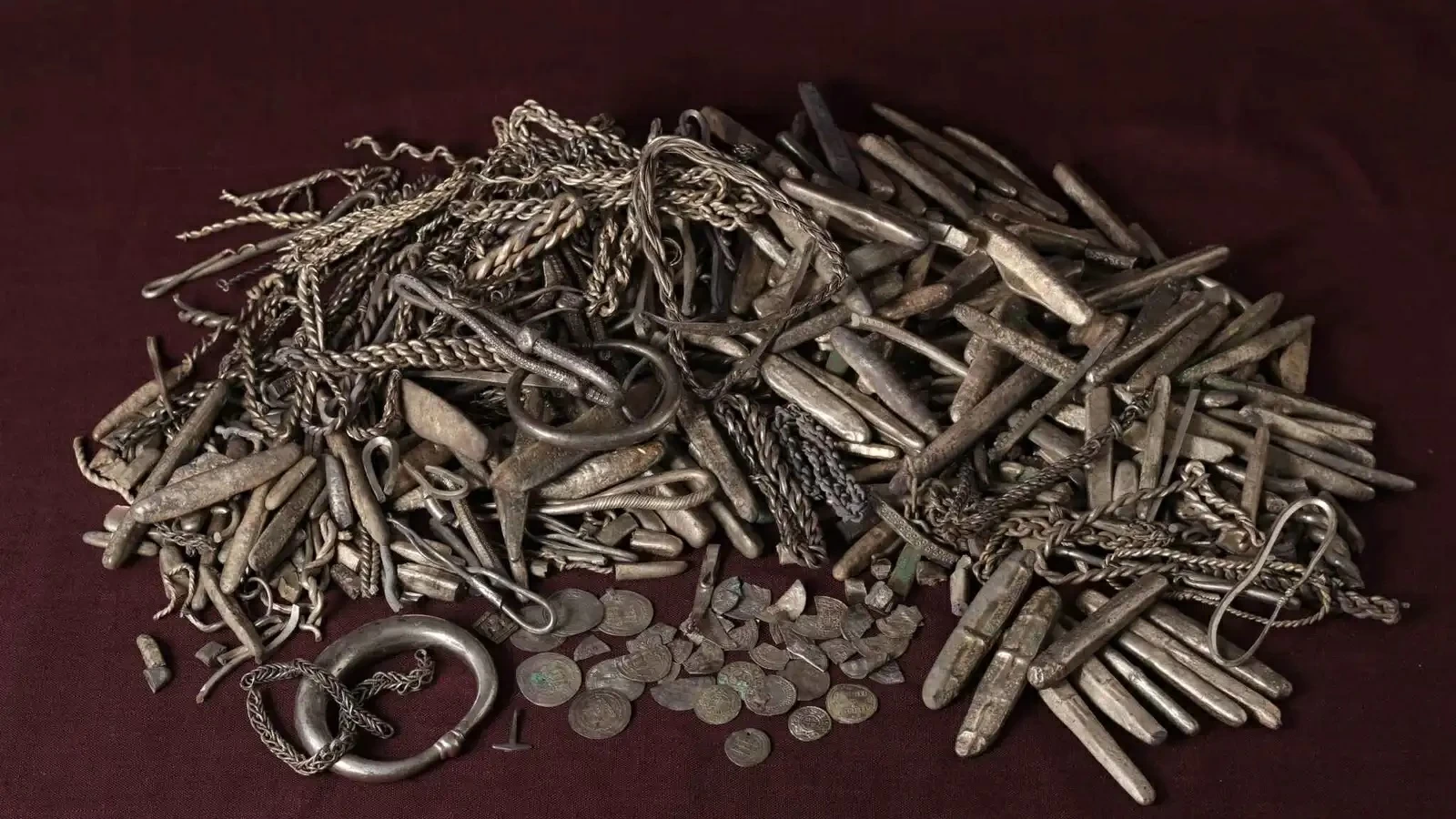
وبحسب خبراء الآثار، يبلغ الوزن الإجمالي للمكتشفات نحو 18.5 كيلوغرام، موزعة على قرابة 700 قطعة وشظية، ما يجعله أكبر كنز فضي من عصر الفايكنغ يُكتشف في الدنمارك حتى الآن. ويتجاوز الكنز بذلك بثلاثة أضعاف تقريباً وزن كنز «تيرسليف»، الذي كان يحمل سابقاً لقب الأكبر في البلاد بوزن بلغ نحو 6.5 كيلوغرام.
وضم الاكتشاف تشكيلة واسعة من القطع، بينها أساور وسبائك وحلي، إضافة إلى 47 عملة كاملة وأجزاء من عملات أخرى. كما عُثر ضمن المجموعة على قلادة تتخذ شكل مطرقة الإله «ثور»، أحد أبرز الرموز في الميثولوجيا الإسكندنافية.
ولم تقتصر أهمية الكنز على قيمته المادية أو حجمه، إذ كشفت طريقة تقطيع بعض القطع الفضية وتنظيمها وفق أوزان محددة عن جانب مهم من الحياة الاقتصادية في ذلك العصر. فقد كانت الفضة تُستخدم في عمليات التبادل التجاري، بما يشير إلى طبيعة الاقتصاد القائم على الوزن والقيمة في مجتمعات الفايكنغ.
كما قدمت محتويات الكنز أدلة جديدة على اتساع الشبكات التجارية التي ربطت الفايكنغ بمناطق بعيدة. فقد تضمنت المجموعة عملات عربية وأخرى أنغلو ساكسونية تعود إلى فترة حكم الملك إدوارد الأكبر بين عامي 899 و924، إلى جانب سبيكة تحمل نقوشاً بحروف الرونية الإسكندنافية القديمة.
وساعد تنوع هذه القطع ونقوشها الخبراء على تضييق الإطار الزمني للاكتشاف وتحديد الفترة التي دُفن فيها الكنز، التي تعود إلى ما يقارب 1100 عام.
وهكذا، تحولت عملية حفر عادية في حديقة منزل إلى اكتشاف أثري أعاد كتابة ترتيب أكبر الكنوز الفضية المعروفة من عصر الفايكنغ في الدنمارك، وقدم في الوقت نفسه نافذة جديدة على التجارة والثقافة والاقتصاد في شمال أوروبا قبل أكثر من ألف عام.
Some historical discoveries may begin in places no one expects, but finding a massive archaeological treasure during simple household work remains one of the rare surprises. This is exactly what happened in Denmark, when a small project to create a terrace in a home garden led to a discovery that reshuffled the list of the largest known silver treasures from the Viking Age in the country.
In the Rebild area of northern Denmark, the homeowner was digging to remove grass and stones in preparation for a new terrace. After only about half an hour of work, the digging tool struck a strange metal object, which he initially thought might be a wire from an old fence or a buried metal piece.
However, continuing to dig manually revealed a much bigger surprise; silver pieces began to appear in significant quantities, later revealing that what was found was not just a collection of old coins, but an exceptional archaeological treasure dating back to the Viking Age.
According to archaeologists, the total weight of the discoveries is about 18.5 kilograms, distributed over nearly 700 pieces and fragments, making it the largest silver treasure from the Viking Age discovered in Denmark to date. The treasure is approximately three times heavier than the “Terslev” treasure, which previously held the title of the largest in the country, weighing about 6.5 kilograms.
The discovery included a wide variety of pieces, including bracelets, ingots, and jewelry, in addition to 47 complete coins and parts of other coins. Among the collection, a necklace shaped like the hammer of the god “Thor,” one of the most prominent symbols in Norse mythology, was also found.
The importance of the treasure was not limited to its material value or size, as the way some silver pieces were cut and organized according to specific weights revealed an important aspect of the economic life of that era. Silver was used in trade exchanges, indicating the nature of the weight- and value-based economy in Viking societies.
The contents of the treasure also provided new evidence of the extensive trade networks that connected the Vikings to distant regions. The collection included Arab coins and others from the Anglo-Saxon period during the reign of King Edward the Elder between 899 and 924, along with an ingot bearing inscriptions in ancient Scandinavian runes.
The diversity of these pieces and their inscriptions helped experts narrow down the timeframe of the discovery and determine the period in which the treasure was buried, dating back nearly 1100 years.
Thus, an ordinary digging operation in a home garden turned into an archaeological discovery that rewrote the ranking of the largest known silver treasures from the Viking Age in Denmark, while simultaneously providing a new window into trade, culture, and economy in Northern Europe over a thousand years ago.