
In 2016, I published “The Rohingyas: Inside Myanmar’s Hidden Genocide,” the first book devoted to making the case that the persecution of the Rohingya should be understood as genocide. At the time, even using that word was difficult.
I spent years trying to persuade policymakers, diplomats and commentators that what was happening in Rakhine State was not simply discrimination, communal conflict or even ethnic cleansing. The systematic destruction of a people’s ability to exist in their homeland had to be understood for what it was.
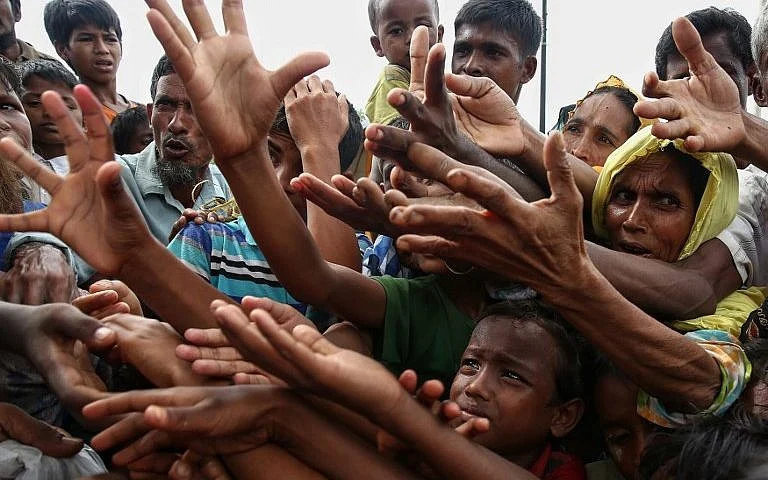
A year later, the Myanmar military launched the operations of August 2017 that drove more than 700,000 Rohingya into Bangladesh amid mass killings, rape and the destruction of villages. The argument over terminology became much harder to sustain.
Now the legal question may finally be approaching its most consequential moment.
Gambia brought a case against Myanmar at the International Court of Justice in 2019 under the Genocide Convention. The court rejected Myanmar’s preliminary objections in 2022 and heard the merits of the case in January this year. Gambia’s justice minister has said a judgment is expected in October, although the court itself has not yet announced a date.
If the court finds that Myanmar violated the Genocide Convention, it would be an extraordinary moment. But a harder question arises the morning after the judgment: What does state responsibility for genocide actually require? That question is unusually complicated because Myanmar itself has fragmented.
The military still controls the central state apparatus but its authority has eroded across large parts of the country. The Arakan Army now controls much of Rakhine State, the territory from which the Rohingya were expelled. The national unity government claims democratic legitimacy and seeks to construct a future federal Myanmar.
International law, however, does not prosecute political moments. It deals with states. The case before the International Court of Justice is not Min Aung Hlaing versus Gambia. It is Gambia versus Myanmar. That distinction is fundamental. Governments change. Regimes fall. States continue.
If Myanmar is found responsible for genocide, that responsibility cannot simply disappear if the military one day loses power. A future democratic government would inherit a state found to have violated one of the most serious obligations in international law.
This may initially seem unfair. Many members of Myanmar’s democratic opposition opposed military rule and had no role in the atrocities of 2017. Why should they bear responsibility for crimes committed by generals they fought against? Because state responsibility is not the same as personal guilt.
No future democratic leader should be treated as personally responsible for crimes he or she did not commit. But a state cannot erase its obligations simply by replacing the people occupying government offices. If it could, international accountability would become almost meaningless. A regime could commit atrocities, collapse and leave its victims without remedy because its successors claimed a clean slate.
A state cannot erase its obligations simply by replacing the people occupying government offices.
Dr. Azeem Ibrahim
For Myanmar, this means any eventual genocide judgment must be translated into something more substantial than condemnation. It must shape the architecture of a future political settlement.
The Rohingya question cannot be treated merely as a humanitarian issue or a refugee problem for Bangladesh to manage. If the state of Myanmar is found responsible for genocide, repairing the consequences of that wrong must become a central obligation of the state itself.
That should include restoring citizenship on an equal basis, protecting property claims, ensuring political representation, creating credible security guarantees and preserving the possibility of voluntary, safe and dignified return.
These obligations matter because genocide is not only about killing people. It can also seek to destroy the ability of a group to continue as a group within a society.
For the Rohingya, decades of exclusion culminated in mass expulsion. Nine years after the 2017 exodus, more than 1 million Rohingya remain in Bangladesh. Their absence from Myanmar is becoming increasingly embedded in the political reality of Rakhine.
A legal judgment that identifies genocide but leaves that reality untouched would therefore be incomplete justice. This is why the case matters beyond Myanmar.
The credibility of the Genocide Convention ultimately depends not only on whether courts are willing to use the word genocide. It depends on what follows when they do.
I know how difficult that first step can be. When I wrote about the Rohingya genocide in 2016, resistance to the term was striking. Genocide was too often treated as a word to be reserved for crimes safely located in history, invoked only once the killing was complete and the evidence overwhelming.
But the purpose of the Genocide Convention was never simply to provide historians with a vocabulary for describing catastrophes after they happen.
Recognition is supposed to create obligations. If the court finds that Myanmar committed genocide, the judgment should not become another document in the archive of international justice while the victims remain permanently displaced. It should establish a principle for Myanmar’s future: no government, military or democratic, can inherit the territory and institutions of the state while rejecting its obligations to the people that state expelled.
A future democratic Myanmar should not see this as collective punishment for the military’s crimes. It should see accepting responsibility as part of breaking with them.
The clearest evidence that a new Myanmar is genuinely different from the old one would not be a new constitution or a new government. It would be a state willing to restore to the Rohingya the citizenship, political belonging and security that the old state tried to destroy.
For years, the struggle was to persuade the world to call what happened to the Rohingya genocide. If the International Court of Justice does so, the next struggle will be making that word mean something.
• Dr. Azeem Ibrahim is the director of special initiatives at the New Lines Institute for Strategy and Policy in Washington.
X: @AzeemIbrahim
Dr. Azeem Ibrahim is the Director of Special Initiatives at the Newlines Institute for Strategy and Policy in Washington D.C. and author of “The Rohingyas: Inside Myanmar’s Genocide” (Hurst, 2017). Twitter: @AzeemIbrahim