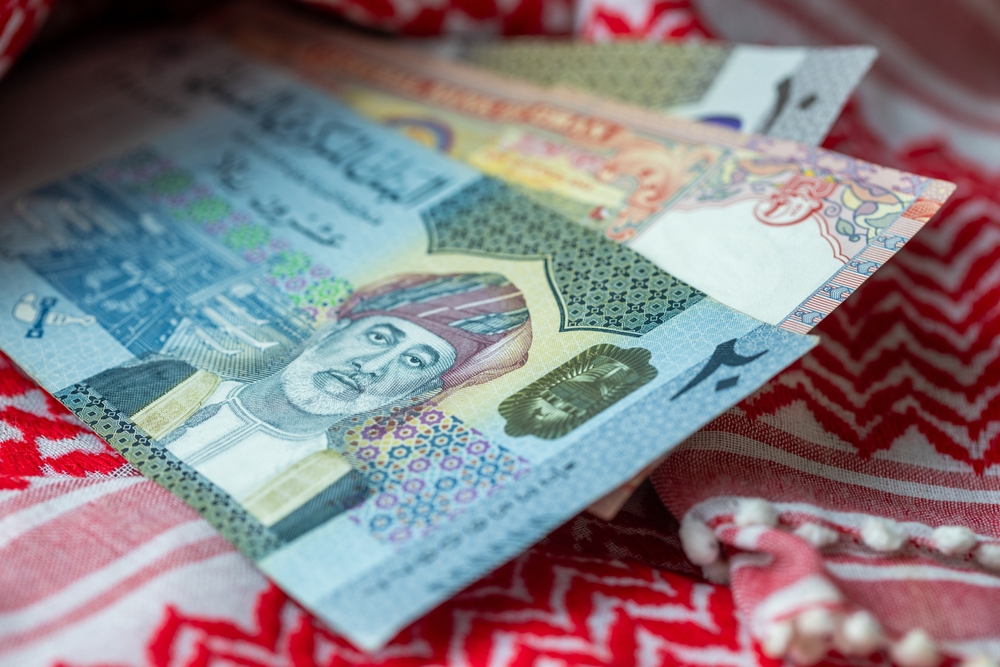

JEDDAH: Oman’s public revenues rose 16 percent year on year to 9.83 billion Omani rials ($25.56 billion) in the first nine months of 2026, while the state budget recorded a surplus of 90 million rials, official data revealed.
The increase in revenues, compared with 8.48 billion rials in the same period of 2025, was mainly attributable to higher oil and non-oil revenues, according to the Financial Performance Bulletin issued by the Ministry of Finance and carried by Oman News Agency.
Public expenditure reached 9.74 billion rials by the end of the third quarter, up 824 million rials, or 9 percent, compared with 8.91 billion rials during the same period in 2025, reflecting increases across all expenditure items.
The latest figures come as Oman continues to advance its fiscal sustainability agenda under Vision 2040. The vision’s implementation report said the country’s public-debt-to-gross domestic product ratio fell from 67.9 percent in 2020 to 34.6 percent in 2025.
Oil and gas revenues
“The bulletin stated that net oil revenues rose 7 percent by the end of the third quarter of 2026, reaching approximately 5.046 billion Omani rials, compared with approximately 4.710 billion rials by the end of the third quarter of 2025,” ONA reported.
It added that the average realized oil price stood at $81 per barrel, while average oil production reached 1.102 million barrels per day.
Net gas revenues climbed 61 percent to 2.09 billion rials, compared with 1.30 billion rials a year earlier.
The release showed that current revenues increased 7 percent to 2.61 billion rials, from 2.45 billion rials in the corresponding period of 2025.
Government spending
On the expenditure side, current spending rose 394 million rials to 6.62 billion rials, up from 6.23 billion rials in the same period last year.
“Development expenditure by ministries, civil government units and economic transformation projects amounted to approximately 1.224 billion rials by the end of the third quarter of 2026, representing 94 percent of the total development expenditure allocation of 1.3 billion rials for the year,” the news agency reported.
It added that contributions and other expenditure increased 9 percent to 1.72 billion rials, compared with 1.58 billion rials a year earlier.
Support for social protection programs, the electricity sector and petroleum products amounted to 486 million, 441 million and 280 million Omani rials, respectively, by the end of the third quarter of 2026. Transfers to the allocation designated for debt repayment totaled 225 million rials.
Expenditure pending settlement stood at approximately 170 million rials by the end of the third quarter of 2026.
Payments made to the private sector through the financial system, for which the documentation process had been completed, exceeded 1.43 billion rials by the end of the third quarter of 2026.
The source said this was in line with the Ministry of Finance’s commitment to settling private-sector dues for which the documentation process had been completed within an average of five working days.
The bulletin also pointed out that Oman’s public debt stood at 14.1 billion rials at the end of the third quarter, compared with 14.7 billion rials at the end of the same period in 2025, representing a decline of more than 600 million rials.
Vision 2040 targets
The improvement in public finances forms part of broader progress under Oman’s Vision 2040 strategy, with 10 of the vision’s indicators having already met their 2030 targets, including those covering public debt as a share of GDP, the budget balance, and the current account balance, according to the first-quarter report on the vision’s implementation.
The first-quarter report on Oman Vision 2040 attributed the progress to fiscal measures, including the implementation of the Financial Balance Plan and Financial Sustainability Program, better debt management and the use of budget surpluses to reduce liabilities.
It also highlighted efforts to improve public spending efficiency and increase government revenues.
“This decrease contributed to reducing the burden of public debt service and expanding the fiscal space available to finance economic, social, and developmental priorities,” ONA reported.
It added that the improvement in financial indicators and the decline in debt levels were also reflected in Oman’s creditworthiness, alongside continued fiscal discipline and improvements in government liability management.
The report also highlighted improvements in Oman’s credit rating, including Fitch Ratings’ December 2025 upgrade of the country’s sovereign rating from BB+ to BBB-, restoring its investment-grade status.
Beyond public finances, the report highlighted improvements in economic activity, with real GDP growth moving from a contraction of 3.4 percent in 2020 to growth of 2.4 percent in 2025, while GDP at constant prices increased from 34.48 billion rials in 2021 to 39.29 billion rials in 2025.
The report also highlighted progress during the first five years of Vision 2040 in attracting investment, diversifying the economy and developing renewable energy, manufacturing, logistics and tourism.
It identified the Eleventh Five-Year Plan, covering 2026-2030, as the next phase for building on these gains, maintaining improvements in fiscal and economic indicators and accelerating progress in areas where targets have yet to be achieved.