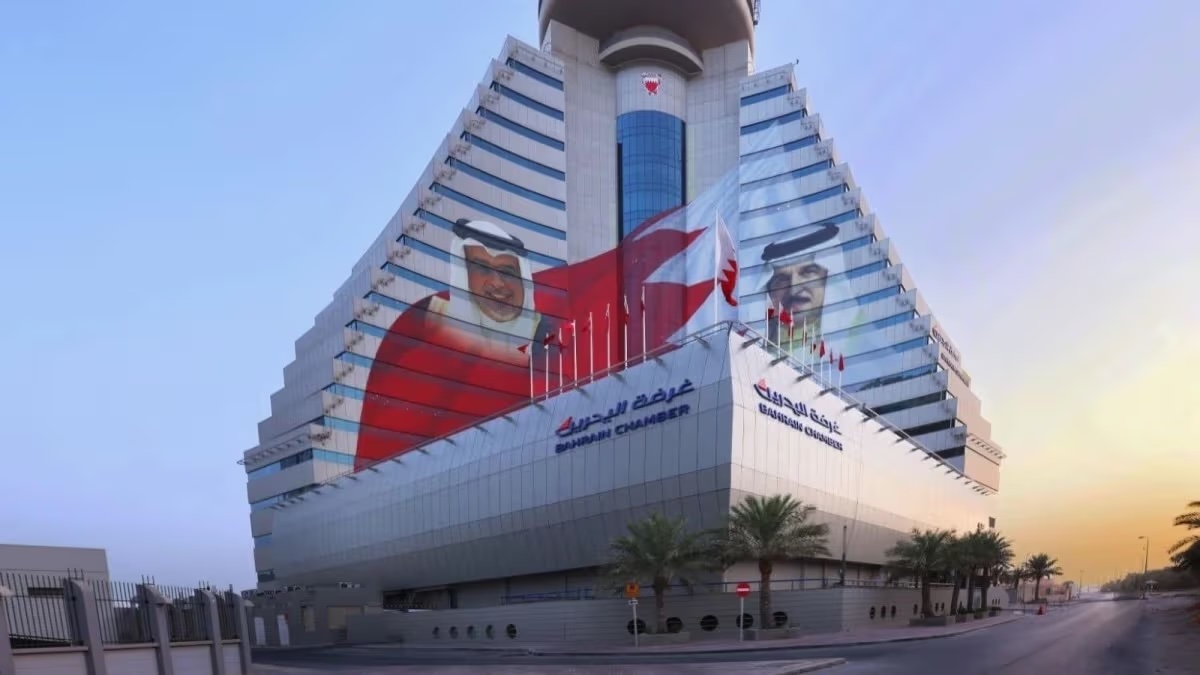
RIYADH: Economic relations between Saudi Arabia and Bahrain extend beyond trade, encompassing significant investment and partnerships between the private sectors of both nations. Data from the Bahrain Chamber of Commerce and Industry indicates that 1,640 enterprises involve Saudi partners, spanning a variety of strategic sectors.
While the volume of non-oil trade between the two countries reached $3.93 billion in 2025, up from $3.88 billion in 2024, Nabeel Khalid Kanoo, chairman of the Bahrain Chamber of Commerce and Industry, emphasized that the next phase aims to move these economic ties from strong existing links and trade exchange toward high-quality projects and sustainable investment partnerships, driven by the private sector.
In an interview with Al-Eqtisadiah, Kanoo stated that Bahrain’s exports to Saudi Arabia in 2025 reached approximately $3 billion, while imports stood at about $905 million, resulting in a trade surplus for Bahrain exceeding $2.12 billion.

He noted that the Bahrain Chamber is actively working to increase bilateral meetings, reciprocal visits, and economic forums. This includes organizing specialized sectoral meetings to connect Bahraini companies with their Saudi counterparts, as well as highlighting investment opportunities in both markets and encouraging the formation of alliances and joint ventures.
Here are excerpts from the interview:
How would you describe the status of Saudi investments in Bahrain, and what is their significance to the Bahraini economy?
The Saudi presence in the Bahraini business sector is both extensive and diverse. Data available to the Chamber indicates the existence of approximately 1,640 establishments linked to Saudi partners, spanning a range of strategic sectors that bolster investment and trade flows between the two nations.
More significant than the raw figure is the diversity of this presence, which encompasses contracting and construction, trade and distribution, real estate and investment, industry, professional and technical services, finance and insurance, transport and logistics, healthcare, hospitality, and more.
This diversity underscores that the economic relationship between Bahrain and Saudi Arabia has evolved beyond traditional trade; it is increasingly rooted in investment, partnerships, the exchange of services and expertise, and business integration.
We view Saudi companies and investors as key partners in the Bahraini economy, while simultaneously identifying substantial opportunities for Bahraini firms to expand their footprint within the Saudi market.
While the number itself is significant, what matters most is the nature of this presence, its sustainability, and its capacity to generate further joint projects and investments.
Moving from the scale of investment to trade activity, what was the volume of trade exchange between the two countries in 2025?
The volume of non-oil trade between Bahrain and Saudi Arabia reached approximately $3.88 billion in 2024, rising to about $3.93 billion in 2025, a modest growth of around 1 percent. In 2025, Bahrain’s exports to Saudi Arabia reached approximately $3.03 billion, while imports stood at about $905.2 million, resulting in a trade surplus for Bahrain exceeding $2.12 billion.
These figures highlight the depth of economic integration between the two nations, while also indicating significant potential for further growth, diversification of trade, and expanded investment.
Do you expect the growth in bilateral trade to continue throughout 2026?
We anticipate that this positive momentum will persist through 2026, driven by an expanding range of traded products and services, the ongoing evolution of the business environment, and the significant economic and developmental activity currently underway in Saudi Arabia.
Our objective extends beyond merely increasing trade volumes; we aim to shift further toward productive projects, investments, and joint partnerships.
You have spoken about shifting the focus from merely increasing trade exchange toward productive projects and joint investments. What are the key plans you are working on to achieve this?
We aim to evolve the economic relationship between Bahrain and Saudi Arabia, moving beyond strong existing ties and trade exchange toward a broader phase characterized by high-impact projects and sustainable investment partnerships, led by the private sector in both nations.
The Chamber is working to intensify bilateral meetings, reciprocal visits, and economic forums. We are organizing specialized sectoral meetings to connect Bahraini companies with their Saudi counterparts, while also highlighting investment opportunities in both markets and encouraging the formation of alliances and joint ventures.
Furthermore, we are focused on integrating Bahraini companies into value chains and major development projects in Saudi Arabia. By capitalizing on opportunities within promising sectors, we aim to expand the presence of the Bahraini private sector and generate added value for both national economies.
We believe the next phase must place a greater emphasis on transforming opportunities and discussions into actionable projects and tangible economic outcomes.
What is the role of the Bahraini-Saudi Joint Business Council, and what are some of the key initiatives it has produced so far?
The Bahraini-Saudi Joint Business Council serves as a vital channel for direct engagement between the business communities of both countries. Its role extends beyond the mere exchange of views; it actively identifies investment opportunities and the challenges faced by companies, while proposing initiatives and solutions that facilitate trade and investment.
Over the past period, the Council has worked on several significant initiatives, including pushing for the establishment of a joint Saudi-Bahraini company in the construction and building materials sector. Furthermore, it has formed specialized committees for industry and logistics to oversee joint initiatives and address challenges that hinder the smooth flow of trade and investment between the two nations.
What do you aim to achieve in the coming phase through the Business Council, particularly regarding the initiatives already underway?
We look forward to building upon these outcomes by broadening the participation of business owners, identifying actionable opportunities and projects, encouraging partnerships and alliances between Bahraini and Saudi companies, and conveying the private sector’s perspectives to the relevant authorities, thereby helping to resolve challenges and improve the business environment.
In our view, the success of the Business Council is not measured by the number of meetings held, but rather by the tangible projects, investments, and partnerships that emerge from them, all of which should benefit the private sector and the economies of both countries.
Which sectors do you consider to hold the greatest potential for cooperation and joint investment?
Industry stands out as one of the most promising areas, specifically manufacturing, aluminum, iron and steel, as well as the food and pharmaceutical industries. These sectors offer significant opportunities for integration across production processes and value chains, ultimately enhancing added value.
There are also significant opportunities in logistics, transportation, warehousing, and distribution, leveraging the geographical proximity and active commercial exchange between the two nations, as well as in tourism, hospitality, entertainment, technology, digital transformation, financial services, insurance, and e-commerce.
Furthermore, the major development projects currently underway in Saudi Arabia offer extensive prospects for Bahraini companies across the construction, real estate, energy, infrastructure, and services sectors, whether directly or through partnerships and alliances with Saudi firms.
We believe the greatest opportunity lies in transitioning from the mere exchange of goods and services toward the creation of joint investments and interconnected value chains between the two countries.
How have industrial, commercial, and logistical relations between Bahrain and Saudi Arabia contributed to supporting the continuity of supply chains, especially at present?
Regional and international developments have underscored the importance of building supply chains that are more resilient, localized, and diversified, an area where the value of Bahraini-Saudi integration becomes clearly apparent.
The direct geographical link provided by the King Fahd Causeway, combined with the ports, airports, and advanced logistical infrastructure in both nations, shortens distances and transit times. This facilitates the continuous flow of goods while mitigating the risks and costs associated with long, complex supply chains.
Furthermore, the diversity of trade between Bahrain and Saudi Arabia, spanning industrial, food, and pharmaceutical products, as well as construction materials and consumer goods, establishes a robust foundation for strengthening supply security and enhancing the ability of both markets to navigate external fluctuations.
We see additional opportunities to expand cooperation in areas such as warehousing, distribution, joint manufacturing, logistics, and the exchange of information between the public and private sectors.
Integration between Bahrain and Saudi Arabia does not merely serve bilateral trade; it can also function as a component of a more efficient and resilient supply ecosystem across the Gulf region and beyond.
How do you view the role of the Saudi-Bahraini Coordination Council in advancing economic cooperation, and which areas should be prioritized?
The Saudi-Bahraini Coordination Council serves as a vital strategic framework that has helped transform the exceptional relationship between the two nations into more structured, institutionalized action plans, initiatives, and projects. This has been reflected in a number of practical initiatives, including the “Takamul” initiative in the industrial sector, which aims to boost the trade of industrial goods, encourage industrial investment, promote exports and re-exports, and facilitate the exchange of knowledge and expertise between the two countries.
The Council’s proceedings also saw the signing of several significant agreements and memoranda of understanding, covering areas such as the avoidance of double taxation, the promotion of direct investment, sustainable development, and competition, which serve to strengthen the institutional framework for economic and investment relations.
Looking ahead, we believe the focus should be on facilitating the flow of trade and investment, enhancing logistical connectivity and supply chains, deepening industrial integration, and increasing the participation of companies from both nations in development projects. Priority sectors also include technology, the digital economy, financial services, tourism, energy, and sustainability.
We also emphasize the importance of continuing to directly involve the private sector in identifying challenges and opportunities, ensuring that proposed initiatives are aligned with the needs of business owners and can be translated into tangible projects.
In this context, the Bahraini-Saudi Business Council serves as a direct arm for the business community, connecting companies and investors, conveying their perspectives, and helping to transform strategic directions into concrete opportunities and partnerships on the ground.