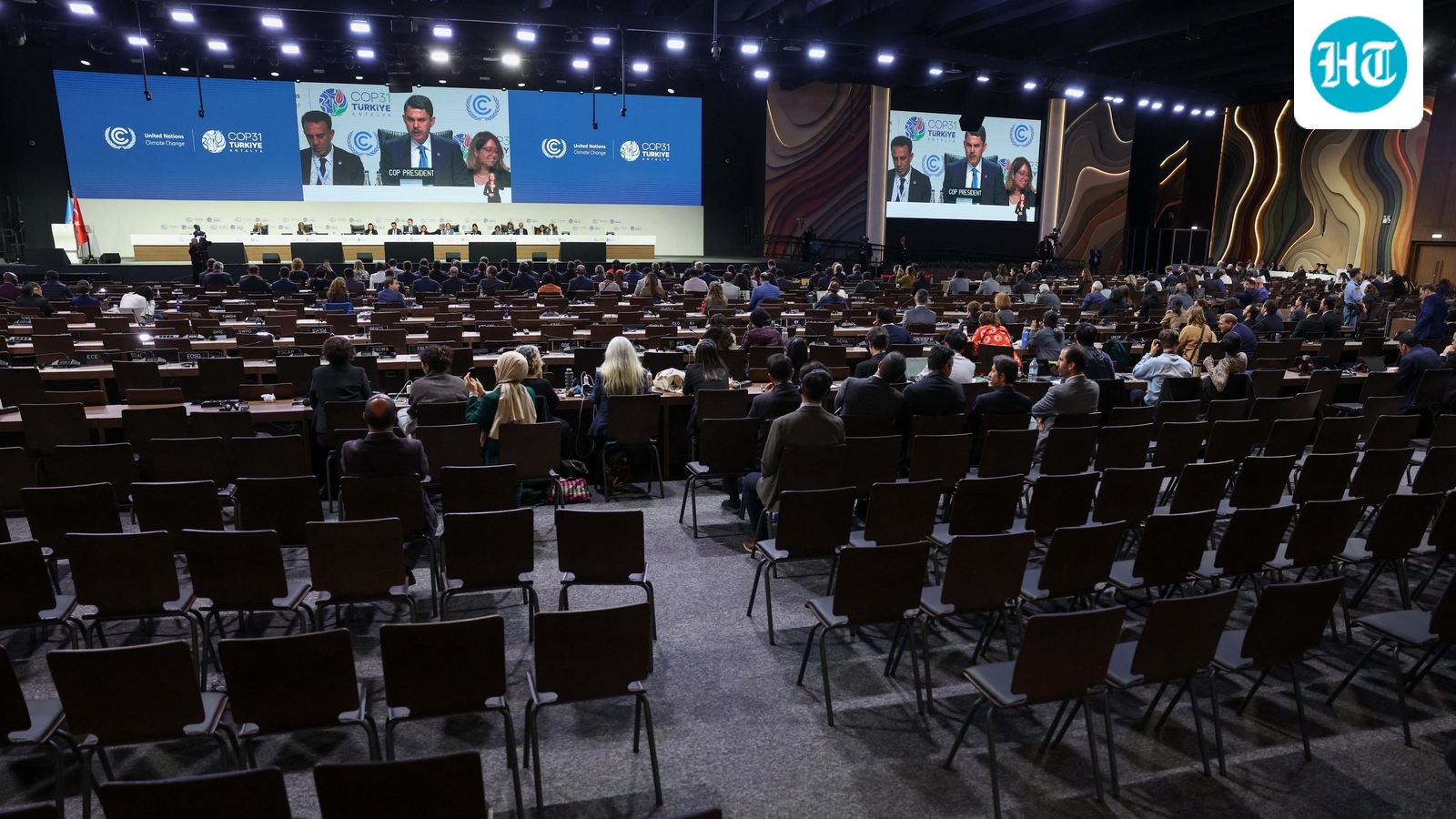
On November 20, the UN climate summit in Antalya reached its scheduled closing day with an extraordinary imbalance. Delegates adopted decisions on international carbon markets, but left the major disputes over fossil fuels, finance and a just transition unsettled. In the November 19 negotiating draft, even the words fossil fuels had vanished. Talks spilled into Saturday without an agreed overarching political decision. The problem was not that governments had forgotten how to count carbon. They could not agree how to confront the fuels still producing it.

Three years earlier, COP28 had called for transitioning away from fossil fuels in energy systems, alongside accelerating the phasedown of unabated coal power. Oil and gas were not exempted. Yet the Antalya draft retreated even from referring to that commitment. Deleting the words does not delete the emissions; it merely makes national exceptions easier to defend. The scheduled deadline passed without a central political bargain. That itself revealed how little consensus exists.
National emissions inventories count carbon dioxide from burning imported oil or gas in the country where it is burned. That is sound accounting: counting it twice would distort global totals. But a wealthy exporter can advertise reductions within its borders while approving more extraction for customers abroad. Production decisions and the emissions they enable receive far less systematic political scrutiny. An oilfield does not become climate-neutral because its carbon appears on somebody else’s balance sheet.
Norway offers a revealing example. At COP31, its prime minister said Norway had ‘established timelines for phasing out fossil fuels’. In May, his government expanded the acreage available for petroleum exploration by 70 blocks or parts of blocks, citing jobs, welfare and Europe’s energy security. Norway has ambitious domestic climate targets, but how does new exploration fit the decline in global oil demand needed to meet Paris goals? If energy security justifies drilling for a wealthy exporter, poorer countries are entitled to ask why their own development needs attract less understanding.
Australia’s Future Gas Strategy similarly envisages new gas supply during the transition and some gas use beyond 2050, even as the country’s climate minister led negotiations in Antalya. That does not make Australia responsible for the draft’s deletion. The contradiction is broader than any one delegation. The 2025 Production Gap Report found that governments plan more than twice the fossil-fuel production in 2030 consistent with limiting warming to 1.5°C. This includes developing producers, but wealthy exporters cannot escape particular scrutiny when they possess more resources and alternatives.
The double standard is equally visible in trade and finance. Since January 2026, the European Union’s carbon-border regime has imposed enforceable obligations on importers of selected products, including steel and aluminium from India. Designed to prevent carbon leakage, it complements domestic EU carbon pricing. Yet climate-finance delivery lacks comparable certainty. OECD figures show developed countries provided and mobilised $136.7 billion in 2024, but they first met their original $100-billion annual goal in 2022, two years late. Loans accounted for 67% of public climate finance in 2024. Antalya’s November 19 draft also dropped an earlier proposed $120-billion annual adaptation-finance figure. The contrast is stark: carbon obligations arrive with rules; finance often arrives late, as debt, or without a clear baseline.
India’s insistence on equity deserves more than a procedural nod. It has argued in Antalya for historical responsibility, fair access to the remaining carbon budget and the developed countries’ financial obligations under Article 9.1 of the Paris Agreement. A uniform exit deadline cannot ignore affordable electricity, industrial employment or the needs of coal-dependent districts. India should not be forced to choose between development and an accelerated transition that wealthier economies have not adequately financed. Nor should the weakening of fossil-fuel language be mistaken for a victory: A text that eases pressure over coal can also shield new oil and gas extraction abroad.
The response should be a tougher, fairer bargain. India could press for an international register of new oil and gas licences, expected output and emissions from burning exported fuels. Such disclosures would supplement, not replace, national inventories. Wealthier producers should face transparent tests of whether new projects fit declining demand, and deliver dated commitments of grants and affordable transition finance. For India, that support should build reliable grids, storage, cleaner industry and transport that reduces imported-oil dependence. Coal districts need funded plans for jobs and local revenues, not merely distant targets.
Antalya’s failure to close its central bargain on schedule should force a harder question: who gets to profit from producing fossil fuels, and who pays to escape dependence? There cannot be one standard for coal powering developing economies and another for oil and gas enriching wealthy exporters. Put oil in the dock—not to acquit coal, but to end the privilege of demanding sacrifice abroad while keeping drilling options open at home.
(The views expressed are personal)
This article is authored by Sayanta Ghosh, senior associate fellow, The Energy and Resources Institute (TERI), New Delhi.