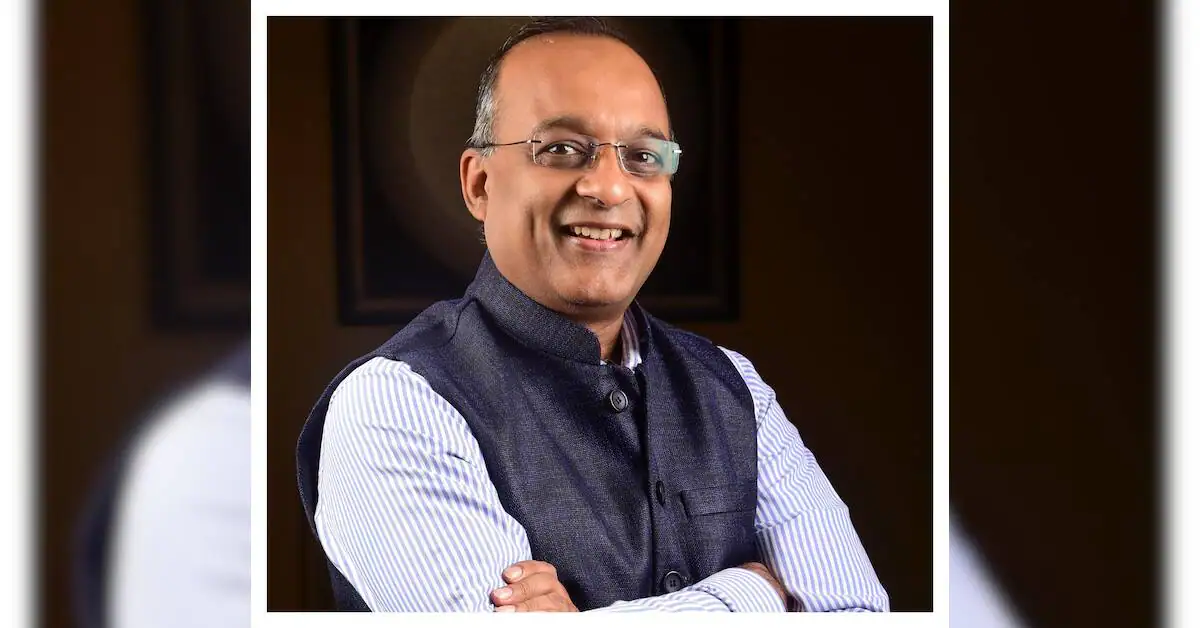
HDFC Bank – the country’s largest private sector lender – will be racing against time to find a replacement for its MD & CEO Sashidhar Jagdishan – who decided not to seek reappointment, less than two months before his second term would have ended.
Jagdishan (61) was first appointed in October 2020, succeeding Aditya Puri, and was reappointed in 2023. His current term ends on 26 October this year.
The process to select a CEO in Indian banks is typically long-drawn as it needs regulatory approval. There have been instances in the past when the regulator has not accepted any of the candidate names recommended by a bank, which then had to rework the process.
The bank’s board has to send at least two names to the Reserve Bank of India for its approval. There have been instances when the regulator insisted on at least one name of a candidate who is not from the bank.
First, the bank’s four-member Governance, Nomination and Remuneration Committee, which is headed by Harsh Kumar Bhanwala, former chairman of Nabard, has to meet and decide on the strategy for selecting the new CEO.
“They have to first shortlist 7-8 candidates, including external candidates,” said a source. “Since HDFC Bank is a large bank, the regulator can always allow some dispensation.”
Banks typically appoint a search firm to shortlist probable candidates.
HDFC Bank, apart from State Bank of India and ICICI Bank, is a systemically important bank according to the RBI, and is subject to higher capital requirements.
Sources indicate Jagdishan can be asked to stay a little longer than 26 October, to give more time to the bank to identify a new CEO. In an exchange notification on Saturday, the bank, while informing that Jagdishan will not be seeking reappointment, also said he will retire from the services of the bank “upon the close of business hours on October 26, 2026.”
Apart from Jagdishan, deputy managing director Kaizad Bharucha (60) and executive director V Srinivasa Rangan (66) are the other two whole-time directors on the board. Bharucha, who joined the board of the bank in 2014, is the longest-serving executive board member of HDFC Bank. According to RBI norms, a whole-time director can serve for not more than 15 years on the board of a bank.
“Bharucha can still serve at least one term as CEO as he still has two and half years left as board member,” the person quoted above said. Typically, the RBI approves a three-year appointment or reappointment of a bank CEO.
A spate of issues, starting with the sudden resignation of the then part-time chairman Atanu Chakraborty in March, which raised governance issues at the bank, could have led to Jagdishan deciding not to seek reappointment. Chakraborty alleged that certain “happenings and practices” at the bank were not in line with his values and ethics. However, a legal review initiated by the bank later found no basis for Chakraborty’s allegations.
In September last year, the Dubai Financial Services Authority prohibited HDFC Bank’s Dubai International Financial Centre branch from onboarding new clients for mis-selling AT1 bonds to investors.
Since March, HDFC Bank stock has underperformed the broader indices.
Another issue cropped up when an internal probe conducted by the bank found that about Rs 45 crore was paid to the state-run Maharashtra State Road Development Corporation (MSRDC) through marketing expenses classified as “differential interest.” Following this, HDFC Bank issued warning letters and imposed a monetary penalty of Rs 100,000 each on three of its senior employees, including Sashidhar Jagdishan, MD & CEO; Srinivasan Vaidyanathan, CFO; and Arvind Vohra, Group Head – Retail Assets. The decision was taken after the conclusion of an internal review process by a special disciplinary committee of independent directors pertaining to the bank’s arrangement with the Maharashtra State Road Development Corporation (MSRDC) for garnering deposits in 2017 and 2021.
Last week, HDFC Bank stock came under pressure after an investor filed a securities fraud class-action lawsuit against the lender in the US over the MSRDC issue.