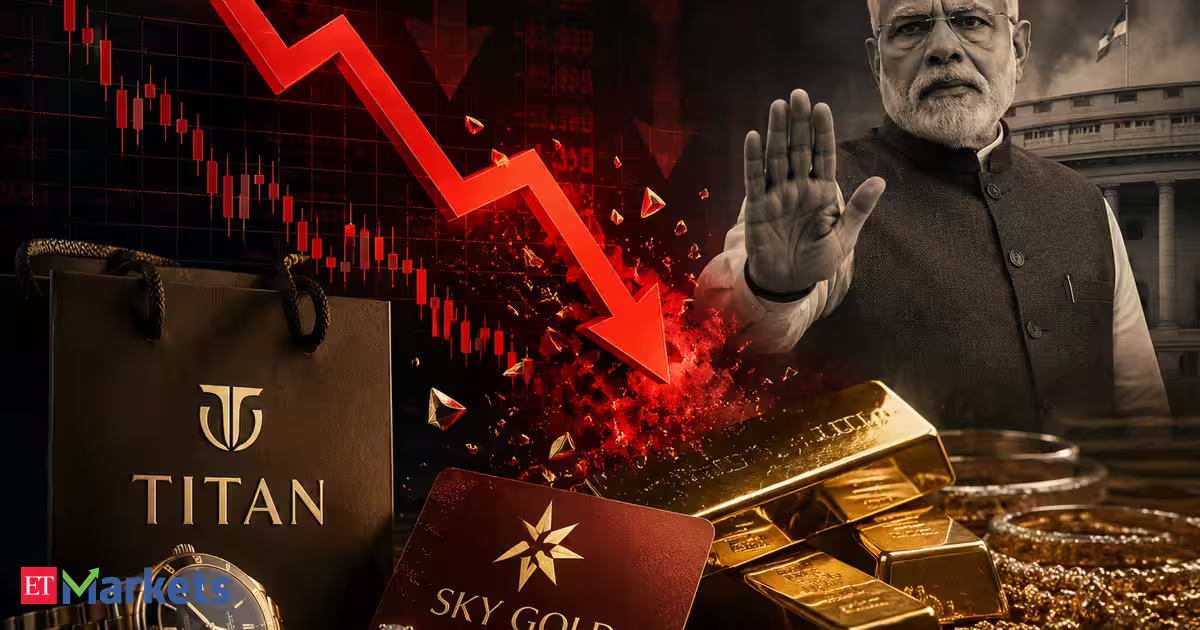
Shares of jewellery companies including Titan Company, Sky Gold and Kalyan Jewellers, among others, fell up to 6% on Tuesday after Prime Minister Narendra Modi urged citizens to avoid gold purchases unless necessary in a social media video posted on Monday.
In today’s session, Titan Company shares declined 2% to Rs 5,015, while Kalyan Jewellers declined 6% to Rs 578 per share. Thangamayil Jewellery shares were down 2% to Rs 5,322 on the BSE, while Sky Gold was down 6.3% to Rs 756 per share.
This is the PMs second such appeal to citizens in quick succession. Back in May, speaking at the event in Hyderabad, PM Modi appealed to citizens to avoid buying gold for weddings for the next one year. The request was part of a wider appeal aimed at conserving fuel and foreign exchange reserves, with the Prime Minister also advocating the return of work-from-home practices and urging people to reduce non-essential travel, including international trips.
India remains the world’s second-largest consumer of gold and imported an average of 60 tonnes of the precious metal every month during FY26, translating into a monthly import bill of nearly $6 billion.
What does PM Modi’s remarks mean?
For Indian households, the precious metal represents tradition, security, weddings, savings and generational wealth, making the Prime Minister’s remarks both unusual and significant.

Gold has historically been viewed as one of the safest long-term stores of value for Indian families, particularly during periods of uncertainty. Which is precisely why the comments triggered a sharp reaction across the market, with shares of jewellery companies plunging as much as 9% on Monday in a knee-jerk selloff.
But beyond the immediate market reaction, the Prime Minister’s appeal appears rooted in a larger macroeconomic concern: protecting India’s foreign exchange reserves at a time of elevated global uncertainty, rising crude oil prices and pressure on the rupee.
Gold outlook
The recent pullback could offer investors an opportunity to gradually accumulate gold, according to Jefferies’ Global Head of Equity Strategy Christopher Wood and billionaire hedge fund manager John Paulson. Both believe the precious metal could be at the beginning of a long-term bull run.
“As people lose faith in paper currencies, gold as an alternative will continue to grow,” Paulson said. The billionaire, whose bet against subprime mortgages became one of the most profitable trades in Wall Street history, turned his attention to gold in 2009.
Paulson had argued that the fiscal and monetary stimulus following the financial crisis would eventually weaken the US dollar. Since then, gold prices have roughly quadrupled, crossing the $5,000 threshold before pulling back.
He said demand for bullion continues to broaden, with central banks adding to their reserves while interest from the private sector also rises.
“Gold is becoming the most apt reserve currency in the world, replacing fiat currencies,” Paulson said. “The demand from central banks, for instance, has continued to grow, as has the private sector.”
(Disclaimer: Recommendations, suggestions, views and opinions given by the experts are their own. These do not represent the views of The Economic Times)