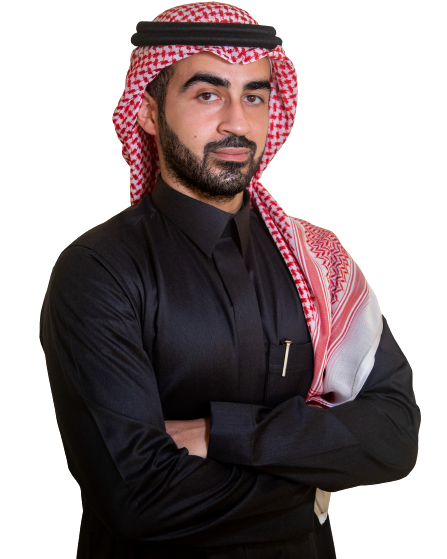

“Abdulmalik, clear your diary. We’re driving north.”
He had been asking me for months which part of the Kingdom he should see next. I had been waiting for the right answer, and this winter I finally had one. In October, Masar Al-Shamal, the Northern Trail, was given its official identity as part of the Saudi Winter 2026 program, under a slogan I believe in increasingly with every kilometer: “Every stop is a journey.”
The trail stretches about 1,200 kilometers from Riyadh to Jubbah in the Hail region. It links 16 stops across Riyadh, Qassim and Hail and offers more than 130 experiences along the way. But what drew me to it isn’t where it ends. For most of my life, the road north was something to get through — a long drive between a starting point and a reason to be somewhere else. The Northern Trail flips that idea on its head. Here, the route is the destination, and the towns, farms, dunes and souks you would once have passed at 120kph are the whole point.
I told Abdulmalik we had one rule: no rushing.
We left the capital early, and within a couple of hours we were walking the lanes of Thadiq’s old mud-brick town. Abdulmalik wanted a coffee at Al-Majid Souk before anything else. I wanted the camel rides and falconry. We compromised and did both, then watched a local beekeeper at work. It was something neither of us expected on day one, and it set the tone for everything that followed.
In Shaqra we wandered the heritage town and stopped at Al-Subaie Palace before taking coffee in a tent, the way it is meant to be taken. Ushaiqer felt like stepping back in time. The heritage village and the Hamad Al-Salem Museum hold stories of the families who lived there, and the viewpoint on Mount Ushaiqer gave us a sunset I am still describing to my family. In Al-Qassab, the Muqhem salt pans glittered in the afternoon light, and a salt farm tour showed us a craft that has shaped the town for generations.
“On a normal trip,” Abdulmalik said, “we would have driven straight past all of this.” That was exactly it.
Al-Majmaah greeted us with the lookout at Mount Munikh, the Al-Askar Palace and the historic Al-Sanie school. In Al-Ghat we picked fruit with a local farmer, and Abdulmalik, who claims he has never met a fruit he did not like, filled a bag far bigger than he needed. Then came Al-Zulfi, with the Thuwairat dunes, the Ulqa heritage village and, for the brave, paragliding. I will let you guess which of us was brave. (It was not me.)
Crossing into Qassim, the trail turns to palms, farms and food. In Al-Mithnab we climbed to the Khartoum mountain viewpoint and picked fruit at a local farm. Unaizah’s Al-Bassam heritage house is a lesson in Najdi architecture, and the restaurants along Palms Avenue are a lesson in patience, because you will want to try everything. In Buraidah, Date City showed why this region’s name is spoken with such pride.
Qassim is also where you should come hungry. Over two days we ate jareesh, qursan and marqooq, the dishes our grandmothers made, and Abdulmalik made a solemn promise to buy kleija, the pastry Qassim is famous for, for every member of his family. I counted at least four boxes in the car by the time we left.
Before heading to Hail, we stopped at Uyun Al-Jiwa to see Antara’s rock and watch sadu weaving being done by hand, a craft passed down through generations. It is the kind of moment that reminds you that heritage is not only something kept behind glass. Here it is lived.
Hail welcomed us the way Hail always does. We climbed to Aarif Fort, explored Al-Qashla Palace and walked Barzan Souk for handicrafts. On Mount Samra, home of the legendary fire of Hatem Al-Tai, the Arab world’s great symbol of generosity, Abdulmalik turned to me and said, “Now I understand where our hospitality comes from.” That night, far from the city lights, we lay back and looked at more stars than I knew existed.
Our final stop was Jubbah. At Jabal Umm Sinman, part of a UNESCO World Heritage site, rock inscriptions more than 10,000 years old tell of the people who crossed this land long before us. Standing with the golden dunes of the Great Nafud behind us, it struck me that they, too, were travelers on a route. For them, as well, the journey was the story.
Before we set off, I had gone through every stop on Visit Saudi so I could plan our days properly. Even so, the trail surprised me at almost every turn. It can be driven in five stages, and four train stations serve the route, so anyone who prefers the rails can ride to Qassim or Hail and explore from there. However you travel, the advice is the same. Don’t treat the Northern Trail as a way to get somewhere. Treat it as the somewhere.
On the drive back, with the kleija safely packed and the dunes fading in the mirror, Abdulmalik was quiet for a long time. Then he said, “You know, I don’t think we ever actually arrived anywhere.”
I just smiled. That was the point.
• Abdullah Al-Dakhil is the spokesperson and head of marketing partnerships at the Saudi Tourism Authority. He completed his postgraduate studies in the UK and has a keen interest in travel, tourism, culture, and international economics.
X: @AbdullahADakhil